Hey there, amazing stargazers and earth explorers! Have you ever looked up at the night sky and just felt that incredible pull, wondering about the universe’s biggest secrets?
Or maybe you’ve been fascinated by the sheer power and beauty of our own planet, from volcanic eruptions to the serene depths of the ocean? It’s easy to get lost in the daily grind, but taking a moment to connect with the vastness above and the intricate wonders beneath our feet can really shift your perspective.
I’ve personally found that diving into these topics doesn’t just expand my mind; it helps me appreciate the delicate balance of our existence. Lately, with all the buzz around new exoplanet discoveries and groundbreaking insights into climate patterns, there’s never been a more exciting time to be curious.
We’re on the cusp of understanding so much more about how our world works and what lies beyond, pushing the boundaries of what we thought was possible.
From mapping ancient oceans on distant worlds to predicting the next big geological shifts right here at home, the journey is simply breathtaking. My goal here is to share some of that magic with you, cutting through the jargon to reveal the truly fascinating aspects that might just spark your next big idea or simply give you a moment of awe.
So, let’s peel back the layers of the cosmos and our home planet together! Have you ever gazed at the vast expanse of the night sky, feeling a profound sense of wonder at the distant stars and galaxies, or perhaps marveled at the intricate beauty and powerful forces shaping our very own planet Earth?
Both earth science and astronomy offer us incredible windows into the universe, revealing mind-blowing facts about everything from the smallest minerals in our soil to the grandest nebulae light-years away.
These fields aren’t just for scientists; they’re for anyone who’s ever looked up or down and asked, “How?” It’s a truly captivating journey to understand the cosmic dance and the dynamic life of our home.
Let’s explore it now!
Unveiling Our Planet’s Dynamic Heartbeat
Have you ever truly stopped to consider just how alive our planet is, constantly shifting and breathing beneath our feet? It’s absolutely mind-boggling when you think about it.
I remember hiking through some ancient volcanic landscapes, and feeling that raw, primal energy just radiating from the earth. It wasn’t just the visible craters or the solidified lava flows; it was that deep, almost visceral sense of immense power waiting to be unleashed.
Our Earth is a vibrant, complex system, much like a living organism, with its own internal heat engine driving everything from majestic mountain ranges to the deep, mysterious ocean trenches.
We’re talking about the slow, deliberate dance of tectonic plates, which, believe it or not, are always on the move, reshaping continents over eons. It’s wild to imagine that the very ground we stand on today was once part of a supercontinent, Pangea, millions of years ago, and will continue its journey in ways we can barely fathom.
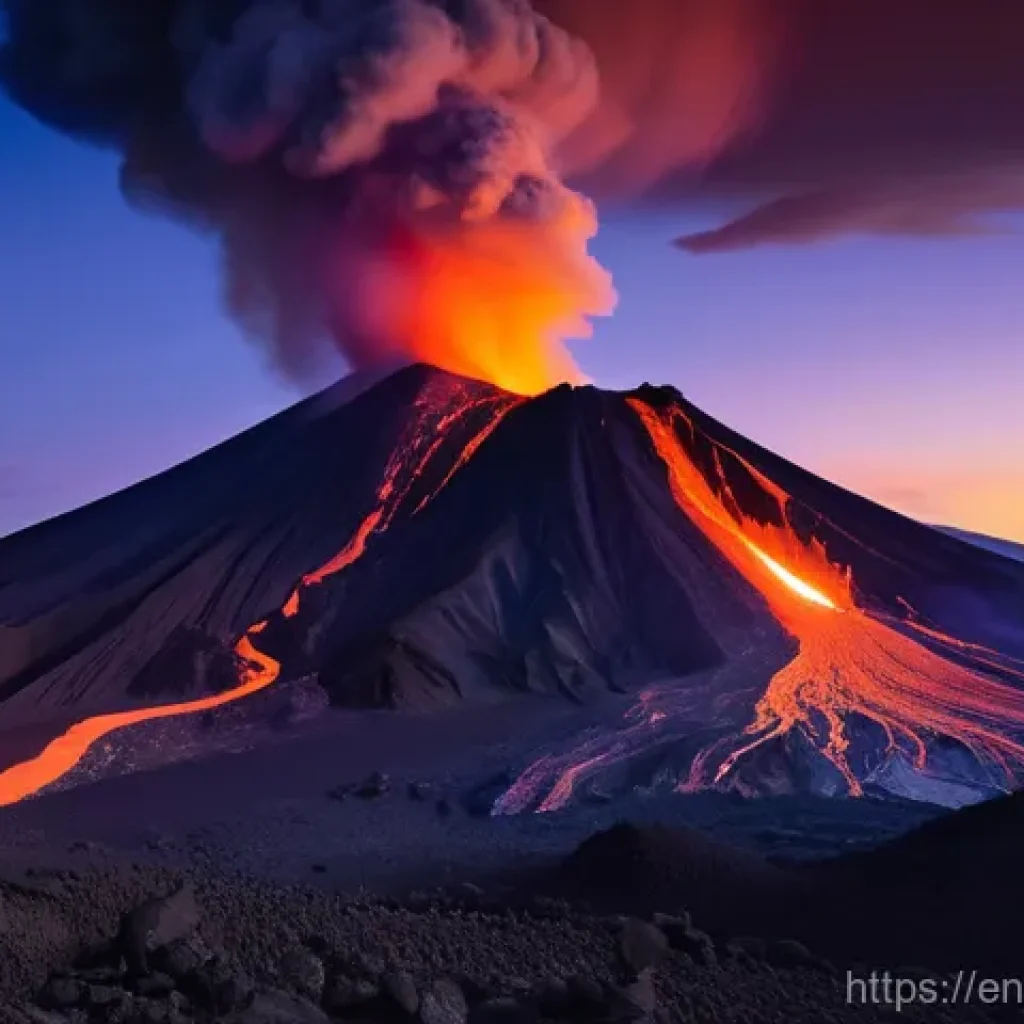
And then there are the volcanoes, Earth’s fiery breath, offering us a glimpse into the molten heart of our world. They’re not just destructive forces; they’re essential for bringing new material to the surface, enriching our soils, and even influencing our atmosphere over geological timescales.
It’s a continuous, dramatic process that keeps our planet vibrant and constantly evolving, reminding us that stability is often just a temporary state in Earth’s grand narrative.
I often find myself looking at a map and trying to picture the continents drifting, almost as if they’re icebergs on a vast, slow-moving ocean. It really makes you feel connected to something much bigger and older than ourselves.
The Shifting Canvas: Tectonic Plates in Motion
It’s incredible to think that the very ground beneath our feet is not static but a constantly shifting jigsaw puzzle. I mean, we don’t feel it day-to-day, but these colossal tectonic plates are always on the move, grinding past each other, pulling apart, or crashing head-on.
This slow, majestic dance is what sculpts our entire planet. Remember the breathtaking Himalayas? Those towering peaks are a direct result of the Indian and Eurasian plates colliding over millions of years.
It’s like two incredibly slow-moving behemoths pushing against each other, creating unimaginable pressure that forces the land upwards. And then there are the rifts, like the Mid-Atlantic Ridge, where new crust is constantly being formed as plates pull away, slowly expanding our ocean basins.
I’ve always been fascinated by how this seemingly imperceptible movement can lead to such dramatic consequences – earthquakes, tsunamis, and volcanic eruptions.
It’s a constant reminder of Earth’s immense power and its continuous geological transformation.
Earth’s Fiery Veins: Unraveling Volcanic Mysteries
Volcanoes have always held a certain allure for me – that raw, untamed power is just mesmerizing. They are essentially windows into Earth’s molten interior, spewing out lava, ash, and gases that have been brewing deep within.
We’re getting smarter about predicting eruptions, thanks to incredible advancements in seismic monitoring and satellite technology. Scientists are constantly tracking ground deformation, gas emissions, and subtle tremors to get a clearer picture of when a volcano might awaken.
I remember reading about a team that used drones to sample gases directly from a crater, which sounds terrifying but is absolutely vital for understanding what’s going on down there.
Each eruption, though potentially devastating, also teaches us so much about the planet’s internal chemistry and how these powerful events shape our landscapes and even influence global climate patterns over long periods.
It’s a delicate balance of destruction and creation, continuously shaping the very ground we live on.
Journeying Beyond Our Blue Marble
Stepping outside on a clear night and gazing up at the sheer number of stars twinkling above never fails to give me goosebumps. It really puts things into perspective, doesn’t it?
Our “blue marble,” as astronauts famously called Earth, is just one small planet in an impossibly vast cosmos. For centuries, we could only wonder what lay beyond, but now, with incredible advancements in telescope technology and space exploration, we’re literally pulling back the cosmic curtain.
It’s like we’re kids in a giant celestial candy store, and every day brings a new, jaw-dropping discovery. I remember vividly the excitement surrounding the first images from the James Webb Space Telescope – the clarity, the depth, the sheer number of galaxies that were just pinpricks of light before.
It wasn’t just pretty pictures; it was a profound shift in our understanding of the early universe, allowing us to peer back almost to the Big Bang itself.
And it’s not just about looking far away. Our own solar system is still full of surprises. Missions to Mars continue to uncover tantalizing clues about ancient water and potential life, while probes to the outer planets like Jupiter and Saturn reveal moons with subsurface oceans, sparking incredible theories about where life might truly thrive beyond Earth.
The human drive to explore and understand what’s out there is, to me, one of our most defining and inspiring characteristics. It’s a constant quest that pushes the boundaries of engineering, science, and our collective imagination.
Gazing into the Cosmic Cradle: Early Universe Unveiled
It’s genuinely mind-blowing to think that with our modern telescopes, we’re essentially time travelers, peering back billions of years to witness the universe in its infancy.
The images from instruments like the James Webb Space Telescope aren’t just beautiful; they’re snapshots of cosmic history, revealing the first galaxies forming and the light from stars that ignited shortly after the Big Bang.
I still get shivers thinking about how that light traveled for so long to finally reach our instruments. It helps us piece together the puzzle of how everything came to be – how simple hydrogen and helium eventually coalesced into the complex structures we see today.
Each new deep-field image feels like finding another missing page from an ancient, cosmic manuscript. It’s truly a privilege to live in an era where we can ask such fundamental questions and actually get tangible answers from the universe itself.
The Quest for Neighbors: Exoplanet Hunting
The idea of other worlds, especially those that might harbor life, has always captivated me. And now, it’s not just science fiction! The sheer number of exoplanets discovered in recent years is staggering – thousands of them, ranging from gas giants to rocky worlds that might, just *might*, be a lot like Earth.
What really gets me is the ingenuity of the methods we use, like observing tiny dips in a star’s brightness as a planet passes in front of it. It’s like detecting a fly crossing a distant streetlight from miles away.
The search has truly broadened our horizons, reminding us that our solar system isn’t unique, and the potential for life to exist elsewhere is not just a dream, but a growing scientific possibility.
Imagine finding a world with liquid water, a stable atmosphere, and just the right conditions – the implications are absolutely monumental for all of humanity.
The Cosmic Dance: Gravity’s Grand Orchestra
Gravity, that invisible force we take for granted every single day, is actually the maestro conducting the most magnificent orchestra in the universe.
It’s what keeps our feet firmly on the ground, but it’s also what holds entire galaxies together, guiding the dance of stars, planets, and everything in between.
Without gravity, our solar system would simply fly apart, and we wouldn’t have the beautiful, predictable orbits that have fascinated astronomers for millennia.
I remember trying to grasp the concept in school – how something so fundamental could be so enigmatic. But when you start to think about it on a cosmic scale, it’s truly astounding.
It’s the force that caused tiny dust particles to clump together billions of years ago, eventually forming planets and stars. It literally built the universe as we know it.
And it’s not just about attraction; it can bend light, creating gravitational lenses that magnify distant galaxies, giving us even deeper insights into the cosmos.
The recent detection of gravitational waves – ripples in spacetime itself – was a monumental achievement, opening up an entirely new way to “hear” the universe.
It’s like we finally developed an entirely new sense, allowing us to detect violent cosmic events like colliding black holes that are otherwise invisible.
This invisible hand of gravity is constantly at work, shaping everything from the smallest asteroid to the grandest galaxy cluster. It’s a relentless, powerful force that governs the very fabric of existence, and understanding it better truly deepens our appreciation for the intricate mechanics of the cosmos.
Ripples in Spacetime: The Story of Gravitational Waves
The discovery of gravitational waves completely blew my mind. It’s one thing to theorize about ripples in spacetime caused by massive cosmic events, but to actually detect them?
That’s another level of scientific triumph. It’s like finally being able to hear the “sound” of two black holes spiraling into each other, or the echo of a supernova explosion from billions of years ago.
Before this, our understanding of the universe relied mainly on light and other electromagnetic radiation. Now, we have a whole new way of observing the most extreme events in the cosmos, peering into phenomena that light simply can’t escape.
This new window into the universe promises to unlock secrets about the origins of black holes, neutron stars, and perhaps even the very first moments of the universe itself.
It’s truly an exciting time to be interested in astronomy, as we’re constantly pushing the boundaries of what we can perceive.
Cosmic Architects: How Gravity Builds Worlds
It’s easy to think of gravity as just a force that pulls things down, but on a cosmic scale, it’s a master architect, building entire worlds and solar systems.
Imagine tiny dust grains and gas particles floating in space. Gravity, even in its weakest form, starts to pull them together. Over vast stretches of time, these clumps grow larger and larger, eventually collapsing under their own weight to form stars and planets.
It’s a process that sounds simple but is incredibly complex and takes millions of years to unfold. Our own sun and Earth were formed this way, and this same process is happening all over the galaxy right now.
Understanding this “cosmic construction” helps us comprehend why planets are where they are, why they orbit the way they do, and how different planetary systems might arise.
It’s a powerful reminder that everything, from the smallest pebble to the largest star, is a product of this fundamental force.
Decoding Earth’s Ancient Diaries
Our planet isn’t just alive; it also keeps an incredible, detailed diary of its entire history, written in rocks, ice, and even the fossilized remains of ancient life.
Learning to read these geological archives is like being a detective on the biggest, most exciting case imaginable, tracing billions of years of change, cataclysms, and gradual evolution.
I remember a trip to the Grand Canyon where you could literally see layers upon layers of Earth’s history exposed, each stratum telling a story of ancient seas, shifting deserts, and volcanic eruptions.
It was like flipping through the pages of a colossal history book. Scientists are constantly developing new techniques to interpret these “diaries,” from analyzing isotopes in ice cores that reveal past atmospheric compositions and temperatures, to studying microscopic fossils that paint pictures of long-extinct ecosystems.
These insights are absolutely crucial, not just for understanding the past, but for predicting the future. By knowing how Earth’s climate has naturally changed over millennia, we gain a better perspective on current climate patterns and the potential impacts of human activity.
It’s a fascinating blend of geology, biology, and chemistry, all working together to unlock the planet’s incredible autobiography. This journey through time isn’t just academic; it gives us a profound appreciation for the resilience of life and the ever-changing nature of our home.
Whispers from the Deep: Unearthing Paleoclimates
One of the most incredible aspects of Earth science is the ability to reconstruct past climates, essentially figuring out what the weather was like millions of years ago.
It’s not guesswork; it’s scientific detective work, analyzing clues embedded in ice cores from polar regions and sediments from the ocean floor. I find it absolutely fascinating how tiny bubbles of ancient air trapped in ice can tell us about atmospheric CO2 levels from hundreds of thousands of years ago.
These natural archives are like incredibly detailed weather reports from the distant past, revealing cycles of warming and cooling, ice ages, and periods of intense volcanic activity.
By understanding these natural fluctuations, we can better contextualize the changes we’re observing today. It’s a powerful tool that helps us understand the long-term trends and the forces that drive our planet’s climate system, giving us critical context for our present and future.
Life’s Ancient Footprints: Fossils and Evolutionary Journeys
Fossils are truly magical – they are the tangible proof of life that existed eons before us, frozen in time within rock. Every time I see a perfectly preserved trilobite or the imprint of an ancient fern, I get a surge of wonder, imagining those creatures swimming in primordial seas or growing in lush, prehistoric forests.
These silent witnesses tell us incredible stories about the evolution of life on Earth, from the simplest single-celled organisms to the complex biodiversity we see today.
They reveal how different species adapted to changing environments, how mass extinctions reshaped the tree of life, and how new forms emerged to fill ecological niches.
Paleontologists, with their meticulous excavation and analysis, are continuously piecing together this immense puzzle, painting an increasingly vivid picture of life’s long, winding journey on our planet.
It’s a story of survival, adaptation, and the relentless march of evolution, reminding us of our own place in this grand, ongoing narrative.
Whispers from Distant Worlds
The sheer thought that there could be life, or even just the conditions for it, on other planets within our solar system is utterly captivating. We’re not just talking about distant exoplanets anymore; we’re actively exploring our cosmic neighborhood with robotic emissaries, looking for those tell-tale signs.
I mean, Mars has always been a prime suspect, right? With its ancient riverbeds and tantalizing hints of subsurface water ice, it sparks endless speculation.
But honestly, it’s the moons of the gas giants that really get my imagination going. Enceladus, a tiny moon of Saturn, is practically a snow globe with geysers erupting liquid water into space – water that could potentially harbor microbial life!
And then there’s Europa, one of Jupiter’s moons, hiding a vast, salty ocean beneath its icy shell, warmed by tidal forces. The possibility of hydrothermal vents on its ocean floor, similar to those that support diverse life here on Earth without sunlight, is just…
mind-blowing. These aren’t just theoretical possibilities; they are tangible targets for future missions. The idea that we might find evidence of life, even simple microbial forms, so close to home would fundamentally alter our understanding of our place in the universe.
It’s not about finding little green men (yet!), but about confirming that the conditions for life aren’t unique to Earth, which would have profound philosophical and scientific implications.
Mars: A Red Planet’s Ancient Water Story
Mars, our dusty red neighbor, has always been a source of fascination, and for good reason! When I see the images sent back by rovers like Perseverance, showing ancient river deltas and lakebeds, it’s undeniable that water once flowed freely across its surface.
This isn’t just a cool geological fact; it means Mars, in its distant past, had conditions that might have been suitable for life. The search now is not just for past water, but for evidence of ancient microbial life that might have thrived when conditions were more hospitable.
The idea that we could find fossilized microbes from billions of years ago on another planet within our own solar system is a truly humbling and exciting prospect.
Every rock sample and every analysis of the Martian soil brings us closer to understanding its habitable past and whether life ever took hold there.
Ocean Worlds: The Allure of Europa and Enceladus
If you ask me where the most exciting potential for extraterrestrial life lies in our solar system, my answer would instantly jump to the icy moons of Jupiter and Saturn.
Europa, with its vast subsurface ocean, and Enceladus, actively spewing plumes of water into space, are just incredible. The thought of liquid water, kept warm by tidal forces, potentially interacting with rocky cores to create hydrothermal vents, is eerily similar to where life might have originated on Earth.
It’s a powerful reminder that life doesn’t always need sunlight; it can thrive on chemical energy in extreme environments. Missions like Europa Clipper are specifically designed to investigate these tantalizing possibilities, searching for the signs of life – or at least, the ingredients for it.
It’s truly a testament to the incredible diversity of environments that exist right here in our cosmic backyard.
The Alchemy Beneath Our Feet and Above Our Heads
It’s truly incredible how the very stuff of the universe, from the stardust that formed our planet to the complex chemistry occurring deep within its core, is constantly transforming.
I often think of it as a grand alchemy, a continuous process of creation and transformation, both microscopic and cosmic. Take, for instance, the minerals that make up the rocks beneath us.
They’re not just inert substances; they’re formed under immense pressures and temperatures, carrying within them a record of Earth’s geological history.
From the shimmering quartz crystals to the deep, dark basalt, each mineral tells a story of its formation and the forces that shaped it. And then, there’s the air we breathe, an intricate blend of gases, constantly interacting, recycling, and being influenced by everything from volcanic eruptions to photosynthesis.
It’s not just a passive blanket; it’s a dynamic system that dictates our weather, protects us from harmful radiation, and enables life as we know it. I remember learning about how the oxygen in our atmosphere, so vital for us, was actually a waste product of early microbial life – a true testament to the planet’s self-transforming nature.
This interplay of geological processes and atmospheric dynamics creates the incredibly diverse environments we see around us, from scorching deserts to lush rainforests.
It’s a constant, never-ending chemical dance that keeps our planet habitable and endlessly fascinating.
| Topic | Key Insight | Real-world Impact |
|---|---|---|
| Plate Tectonics | Earth’s crust is divided into large moving plates. | Explains earthquakes, volcanic activity, mountain formation. |
| Exoplanet Discovery | Thousands of planets exist outside our solar system. | Increases potential for discovering extraterrestrial life. |
| Climate History (Paleoclimate) | Past climates reveal natural variability and drivers. | Informs understanding of current climate change. |
| Gravitational Waves | Ripples in spacetime caused by massive cosmic events. | New window to observe black holes, neutron star collisions. |
| Lunar & Planetary Exploration | Missions to Mars, Europa, Enceladus. | Search for water, signs of past/present life. |
From Stardust to Soil: The Mineral Kingdom’s Secrets
It’s truly a humbling thought that the very ground we walk on, the metals we use, and the gems we admire all originated from cosmic dust. The Earth itself is a gigantic mineral factory, constantly churning out new compounds under incredible conditions.
I’ve always been fascinated by how different minerals form – some requiring intense heat and pressure deep within the Earth, others crystallizing from water solutions.
Each mineral has a unique story, often reflecting the specific geological conditions under which it was created. For example, diamonds, the hardest natural substance, are formed deep in the Earth’s mantle under extreme pressure and then brought to the surface by volcanic activity.
Understanding these processes isn’t just academic; it’s crucial for everything from resource extraction to predicting geological hazards. It’s a beautiful testament to the planet’s incredible capacity for geological alchemy, turning raw elements into dazzling and useful forms.
The Air We Breathe: Earth’s Atmospheric Balancing Act
We often take our atmosphere for granted, but it’s an incredibly complex and dynamic system, far more than just “air.” It’s a delicate, life-sustaining blanket of gases that has evolved over billions of years, constantly interacting with our oceans, land, and living organisms.
What really strikes me is how intricately balanced it is – just the right mix of nitrogen, oxygen, and trace gases to support life. But this balance is constantly being tested, both by natural events like volcanic eruptions and, increasingly, by human activity.
Think about the incredible protective role it plays, shielding us from harmful solar radiation while also trapping just enough heat to keep our planet habitable.
It’s a vital, living component of our Earth system, and understanding its intricate workings is paramount for safeguarding our future. Every breath we take is a direct connection to this amazing, evolving atmospheric alchemy.
Future Frontiers: Exploring the Known and Unknown
The human spirit of exploration seems boundless, doesn’t it? Even with all the incredible discoveries we’ve made, both beneath our feet and light-years away, there’s still so much that remains a tantalizing mystery.
And that’s precisely what makes this field so endlessly exciting! I truly believe we’re living in a golden age of discovery, where new technologies are constantly pushing the boundaries of what we thought was possible.
Imagine deep-sea submersibles capable of withstanding unimaginable pressures, exploring hydrothermal vents where bizarre, unknown life forms thrive without sunlight – a true alien world right here on Earth!
Or consider the next generation of space telescopes, even more powerful than James Webb, that could potentially analyze the atmospheres of distant exoplanets for biosignatures – direct evidence of life.
The challenges are immense, of course, requiring brilliant minds from every scientific discipline to collaborate. But the potential rewards? They are immeasurable, promising to redefine our understanding of life, the universe, and our place within it.
It’s not just about accumulating facts; it’s about inspiring wonder, sparking innovation, and fostering a deeper connection to the cosmos and our incredible home planet.
The next decade promises to be a wild ride of revelations, and I, for one, can’t wait to see what astonishing secrets the universe and Earth will unveil next.
Deep-Sea Ventures: Uncharted Oceanic Depths
The deep ocean remains one of Earth’s last truly unexplored frontiers, and honestly, that thought excites me immensely. We’ve mapped more of the moon and Mars than we have of our own ocean floor!
I often think about the incredible life forms that thrive in these crushing, dark environments, often clustered around hydrothermal vents that spew superheated, chemical-rich water.
These ecosystems are completely alien, yet they exist right here on Earth, offering clues about how life might originate and adapt in extreme conditions, perhaps even on other ocean worlds.
New remotely operated vehicles (ROVs) and autonomous underwater vehicles (AUVs) are pushing the boundaries, allowing us to venture deeper and stay longer, bringing back incredible footage and samples that continuously redefine our understanding of marine biology and geology.
It’s a constant reminder that even on our home planet, there are still vast, uncharted territories waiting to be discovered.
The Next Cosmic Leap: Advanced Telescopes and Probes
Looking ahead, the next generation of astronomical instruments and space probes promises to utterly transform our understanding of the universe. I’m talking about telescopes so powerful they might be able to detect the faint glow of cities on distant exoplanets (okay, maybe that’s a bit of a stretch for now, but still!).
The development of technologies that can directly image exoplanets, not just infer their presence, is a game-changer. Imagine seeing a picture of an Earth-like world orbiting another star!
And closer to home, new missions are being planned to revisit Venus, or to perform more detailed investigations of those tantalizing ocean moons like Europa, possibly even deploying submersibles beneath their icy shells.
These future endeavors represent humanity’s insatiable curiosity, our relentless drive to push beyond the known, and our collective dream of unraveling the deepest mysteries of space and time.
It’s a truly exhilarating time to witness science fiction become scientific reality.
글을 마치며
Whew, what a journey we’ve had today, right? It’s truly humbling to think about our incredible planet’s dynamic dance and the boundless, mind-bending mysteries of the cosmos. Every time I dive into these topics, I’m left with such a profound sense of wonder – feeling tiny yet so connected to something so immensely grand. It’s an ongoing story of discovery, and honestly, the best part is that we’re all witnesses, and even participants, in this epic adventure of understanding our universe and our amazing home.
알아두면 쓸모 있는 정보
1. Explore Your Local Sky: Don’t underestimate the power of simply stepping outside on a clear night. Grab a stargazing app for your phone – there are fantastic free ones that use augmented reality to identify constellations, planets, and even satellites. Better yet, seek out a local astronomy club or observatory. Many offer public viewing nights where you can look through powerful telescopes and get incredible insights from experienced astronomers. It’s a truly immersive way to connect with the cosmic wonders we discussed.
2. Engage with Citizen Science: If you’re passionate about space or Earth science, you can actually contribute to real research! Websites like Zooniverse host numerous citizen science projects where you can help classify galaxies, identify exoplanets, or even track wildlife. Your contributions, no matter how small, can make a significant difference to scientific discoveries. It’s an empowering way to become an active participant in the ongoing quest for knowledge.
3. Understand Earth’s Dynamics for Safety: Living on a dynamic planet means being aware of its processes. Take a moment to learn about the geological hazards in your region, whether it’s earthquake preparedness, understanding local flood risks, or knowing what to do during extreme weather. Local geological surveys and emergency management agencies often provide excellent, accessible resources. Being informed isn’t just about safety; it deepens your appreciation for the powerful forces constantly at work around us.
4. Connect with Climate Science: The Earth’s ancient diaries teach us about past climate shifts, offering crucial context for today’s climate challenges. Follow reputable scientific organizations and climate researchers on social media or subscribe to their newsletters. Understanding the science behind climate change, from ice core data to current atmospheric measurements, helps you discern fact from fiction and engage in informed discussions. It’s about being a responsible inhabitant of our unique blue marble.
5. Follow Space Exploration News: The future frontiers of space exploration are unfolding before our eyes, with new missions and discoveries happening constantly. Keep up with the latest news from NASA, ESA, SpaceX, and other space agencies. Many have fantastic blogs, social media channels, and even live streams of launches and mission updates. It’s an incredible way to witness humanity’s collective journey of discovery and to be inspired by the ingenuity and ambition that drives us to explore the unknown.
중요 사항 정리
At its core, what we’ve journeyed through today reveals an incredibly vibrant, interconnected, and ancient Earth, constantly evolving beneath our feet and across millennia. Beyond our home, the cosmos beckons with its infinite mysteries, where gravity conducts a grand symphony, and the tantalizing possibility of life whispers from icy moons and distant exoplanets. Our relentless human curiosity, fueled by cutting-edge technology and a spirit of exploration, continuously pushes the boundaries of understanding, inviting us to be active participants in decoding the universe’s profound secrets. Remember, every discovery deepens our appreciation for this magnificent existence and our unique place within it, urging us to remain curious and engaged with the boundless wonders that surround us.
Frequently Asked Questions (FAQ) 📖
Q: What are some of the most exciting recent discoveries in earth science or astronomy that have truly blown your mind?
A: Oh, where do I even begin? It feels like every week there’s something new that just makes me stop and say, “Wow!” On the astronomy side, I’ve been absolutely captivated by the latest insights from the James Webb Space Telescope.
We’re getting incredible glimpses into the atmospheres of exoplanets, like K2-18b, looking for potential signs of life. Imagine, finding gases that might suggest biological activity on a world light-years away – it’s mind-boggling!
Then there’s the discovery of the most massive stellar black hole in our galaxy, Gaia BH3, or even binary stars dancing around Sagittarius A, our Milky Way’s supermassive black hole.
I mean, how do these systems even exist with such immense gravity nearby? It really pushes the boundaries of what we thought was possible. Closer to home, in earth science, the discoveries are equally stunning.
We’ve found ancient seafloor rocks buried deep under the Pacific that are over 250 million years old, and scientists are even exploring what they call “dark oxygen” on the ocean floor, which could completely change how we view ocean ecosystems.
And the sheer power of our planet was highlighted by a recent massive landslide in Greenland that created strange seismic waves across the globe. It’s a constant reminder that even our home planet holds so many secrets and is way more dynamic than we often realize.
Personally, seeing these updates just deepens my appreciation for the intricate cosmic dance and the living, breathing world beneath our feet!
Q: It all sounds so vast and incredible, but how can someone like me, who isn’t a scientist, genuinely connect with these cosmic and earthly wonders in my daily life?
A: That’s a fantastic question, and honestly, it’s one I get all the time! I truly believe these fields aren’t just for academics; they’re for anyone with a curious heart.
From my own experience, one of the easiest ways to connect is simply by looking up! Grab a stargazing app like Stellarium, step outside on a clear night, and just identify constellations, planets, or even the faint glow of the Milky Way.
It’s a completely different experience when you know what you’re seeing. For those who want a more hands-on approach, citizen science projects are a game-changer.
NASA, for example, has tons of projects where you, yes you, can help scientists! You could be classifying galaxies, looking for asteroids, or even monitoring mosquito breeding sites right from your computer or phone.
I’ve heard stories of everyday people making genuine scientific contributions, and that’s just incredible. Also, don’t underestimate your local resources!
Science museums, observatories, or even nature centers often have public programs, talks, and events that make these complex topics super accessible and fun.
Taking a hike and really observing the rocks, the soil, or the way water moves can bring earth science to life. It’s about cultivating that sense of awe and asking “why” or “how” in your everyday surroundings.
Trust me, once you start looking, you’ll see the universe everywhere.
Q: Why is it so important for us to keep pushing the boundaries of space exploration and diving deeper into understanding our own planet? What’s the real impact on our lives?
A: You know, it’s easy to think of space exploration or deep earth research as being purely theoretical, far removed from our daily lives. But from what I’ve seen and learned, the impact is actually profound and incredibly practical!
When we explore space, we’re not just chasing stars; we’re innovating at a rapid pace. Think about it: GPS, satellite communications, even the solar panels many of us use today, or medical imaging techniques?
Many of these advancements spun directly out of space research, improving our daily lives in ways we often take for granted. It helps us track weather patterns more accurately, monitor wildfires, and even contributes to medical breakthroughs right here on Earth.
This push for the unknown also inspires future generations in STEM, fostering a global thirst for knowledge and problem-solving. As for understanding our own planet, that’s absolutely critical for our survival!
By studying Earth science, we gain crucial insights into our climate, allowing us to better predict natural disasters like earthquakes, volcanoes, and landslides, and manage vital resources like water and energy more sustainably.
My personal takeaway is that by comprehending our planet’s past climate and geological shifts, we’re better equipped to understand and adapt to current human-driven climate change, and even safeguard our future.
It’s about ensuring our home remains a great place to live, not just for us, but for generations to come. It’s an investment in our collective future, connecting the cosmic with the incredibly local.