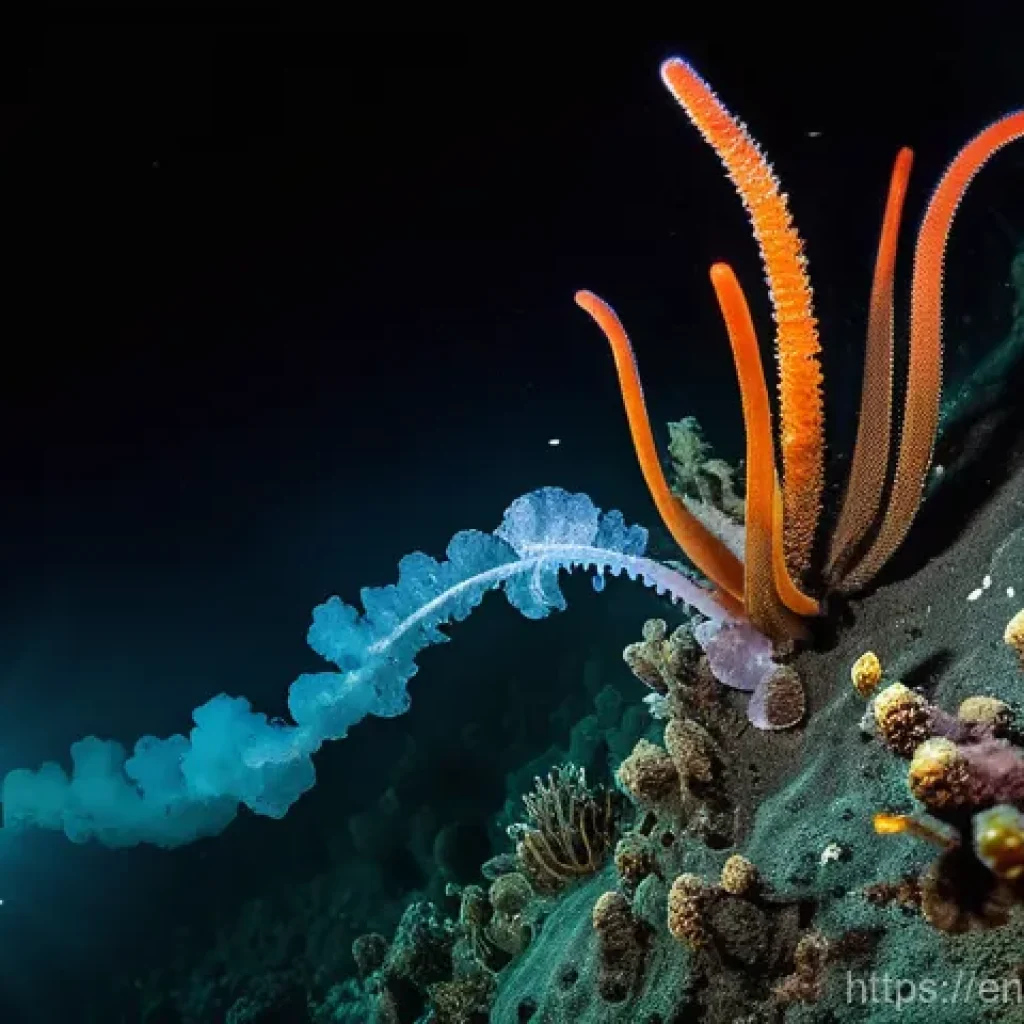
Hey there, fellow explorers and curious minds! You know, sometimes I just stop and think about how truly incredible our planet is. We live on this vibrant, ever-changing ball of rock and water, yet so much of it remains a breathtaking mystery, especially the vast, enigmatic depths of our oceans.
It’s a humbling thought, isn’t it? Even with all our incredible technology, scientists are *still* making groundbreaking discoveries every single day, pushing the boundaries of what we thought we knew about Earth’s very foundations and the life it supports.
Just recently, I’ve been completely mesmerized by some mind-blowing findings that really make you reconsider everything. Deep beneath the crushing pressure and eternal darkness of the seafloor, where sunlight dare not venture, lie some of Earth’s most astonishing secrets: hydrothermal vents.
These incredible geological wonders, often called “black smokers,” are essentially underwater geysers, spewing superheated, mineral-rich fluids from the Earth’s crust.
What’s truly wild is how these extreme environments are bustling with life, featuring unique ecosystems that scientists are still actively uncovering, including newly identified species and even hidden habitats *underneath* the vents themselves!
We’re also learning that these vents might even hold clues about the origins of life on Earth and perhaps even life on other ocean worlds in our solar system, like Jupiter’s moon Europa.
It’s a constantly evolving field that profoundly impacts our understanding of geology, biology, and even Earth’s climate history, with recent studies revealing their past contributions to global warming through methane emissions and their ongoing role in carbon cycling.
These revelations are not just for scientists in labs; they’re reshaping our collective understanding of this blue marble we call home. Ready to dive into this fascinating world and uncover the astonishing truths about our planet’s fiery, hidden heart?
Let’s explore this intricate connection between Earth Science and these incredible hydrothermal vents in much greater detail.
Unveiling the Ocean’s Fiery Heart: A Deep Dive into Vent Discovery
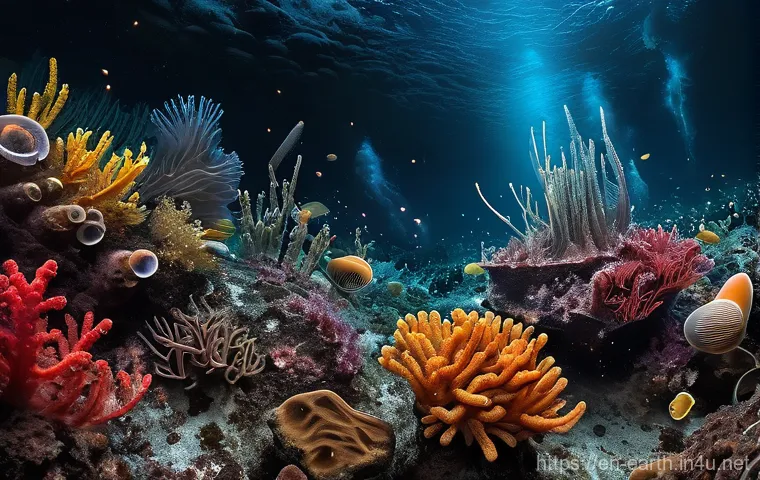
Hey, it’s just mind-boggling to think that for so long, we had no idea these incredible geological features even existed. I mean, imagine the sheer wonder and excitement when scientists first stumbled upon hydrothermal vents!
It wasn’t until the late 1970s that these “black smokers” were discovered, completely revolutionizing our understanding of the deep ocean. Before that, the abyssal plains were thought to be barren, lifeless stretches, an ecological desert.
But then, *boom*, the submersible Alvin, exploring the Galapagos Rift, encountered these vibrant oases teeming with life, utterly defying all previous biological assumptions.
It truly changed everything for me when I first read about it; I felt like I was right there with those pioneering explorers, sharing their awe. We’ve come so far since then, but the thrill of those initial discoveries still resonates deeply with every new vent field we find.
It’s a testament to how much more there is to explore on our own planet, even today.
The Birth of a Black Smoker: How They Form
So, how do these magnificent structures even come into being? It all starts with tectonic plate activity. Where oceanic plates pull apart, like at mid-ocean ridges, magma wells up close to the seafloor.
Seawater seeps down through cracks in the crust, gets superheated by this magma, reaching temperatures that can exceed 400°C (750°F)! This superheated water reacts with the surrounding rocks, dissolving metals and other chemicals.
Because hot water is less dense, it then rises back up through the crust, carrying these dissolved minerals with it. When this scorching, mineral-rich fluid hits the cold, oxygenated seawater, the dissolved metals precipitate out, forming chimney-like structures that can grow several stories high.
It’s an incredible, dynamic process that feels almost alive, constantly building and changing the seafloor landscape.
Pioneering Expeditions: What We First Saw
I remember being completely captivated by the stories from those early expeditions. The scientists aboard Alvin expected to see nothing but mud and darkness.
Instead, their cameras revealed towering chimneys spewing black, smoke-like plumes and, astonishingly, massive communities of previously unknown creatures thriving in this extreme environment.
Giant tube worms, blind shrimp, mussels, and crabs, all living in total darkness, powered not by the sun, but by chemical energy. It was like discovering an alien world right here on Earth.
The sheer scale and complexity of these ecosystems, totally independent of photosynthesis, truly blew my mind and continues to inspire me to this day.
It underscores how adaptable and resilient life can be.
Life Thrives Where the Sun Don’t Shine: Extraordinary Vent Ecosystems
It’s genuinely astounding to ponder how life finds a way, even in what seems like the most inhospitable corners of our world. When we talk about hydrothermal vents, we’re not just discussing geology; we’re also delving into some of the most unique biological communities on Earth.
These are places where the rules of life, as we typically understand them, are completely rewritten. Imagine a world without sunlight, where primary producers don’t use photosynthesis.
That’s the reality for vent ecosystems, and it’s a concept that still gives me goosebumps every time I think about it. The sheer biodiversity in these isolated pockets is breathtaking, constantly challenging our classifications and expanding our biological horizons.
It truly makes you question what else is out there, lurking in the shadows of our planet, waiting to be discovered.
Chemosynthesis: The Basis of Deep-Sea Life
Instead of sunlight, life at hydrothermal vents relies on a process called chemosynthesis. This is where specialized bacteria and archaea use chemical energy, primarily from hydrogen sulfide – the stuff that smells like rotten eggs – to produce organic matter.
These chemosynthetic microbes form the base of the food web, much like plants do on land. They live freely in the water, on the vent chimneys, or in symbiotic relationships within the tissues of larger animals, like the famous giant tube worms.
It’s a completely different energy cycle, and it shows the remarkable adaptability of life. From my experience, seeing how nature has engineered such an elegant solution to living in perpetual darkness is one of the most compelling aspects of vent science.
It highlights that the potential for life isn’t limited by our familiar conditions.
Incredible Creatures: From Tube Worms to Yeti Crabs
The animals living around hydrothermal vents are nothing short of spectacular. Take the giant tube worms (Riftia pachyptila), for instance. They can grow over 8 feet long, have no mouth or digestive tract, and rely entirely on symbiotic bacteria living inside them to convert chemicals into food.
Then there are the “yeti crabs” (Kiwa hirsuta), named for their furry, bristle-covered claws, which they use to farm chemosynthetic bacteria. You’ll also find extraordinary varieties of mussels, clams, shrimp, and even specialized octopuses, all adapted to the crushing pressures, extreme temperatures, and toxic chemistry of their environment.
Each species seems to have its own unique, bizarre, and utterly fascinating way of surviving, and it just reinforces how little we truly know about the ocean’s biological tapestry.
Hidden Worlds Beneath the Vents: Subsurface Discoveries
And here’s where it gets even wilder! Recent discoveries have revealed that life isn’t just thriving *around* the vents, but also *beneath* them, within the porous rocks of the seafloor crust.
Scientists are finding vast microbial communities living in a deep biosphere, completely isolated from the surface ocean. These subsurface ecosystems are supported by different chemical reactions and are thought to represent an even more ancient lineage of life.
It’s like discovering a secret city under the city you thought you knew. This realization has profound implications, not only for understanding Earth’s biodiversity but also for considering the possibility of life existing in similar subterranean environments on other planets or moons.
Earth’s Deepest Secrets: Vents as Geochemical Powerhouses
When I think about hydrothermal vents, I don’t just see them as interesting pockets of life; I see them as the beating heart of Earth’s internal processes, constantly pumping, cycling, and influencing the very chemistry of our oceans.
They’re not passive features; they are active, dynamic geochemical reactors that play a far more significant role in global systems than we initially imagined.
Understanding their full impact is crucial for piecing together the complex puzzle of our planet’s past, present, and future. It’s a constant reminder that the forces shaping our world are often hidden, yet incredibly powerful.
Mineral-Rich Flows: Shaping Seafloor Geology
The fluids spewing from hydrothermal vents are incredibly rich in dissolved minerals – things like iron, copper, zinc, and sulfur compounds. As these hot fluids meet the cold seawater, these minerals rapidly precipitate out, forming vast deposits on the seafloor.
Over geological timescales, these deposits can accumulate into significant ore bodies, some of which are actually mined in shallower waters today. But beyond economic interest, these mineral deposits also provide crucial insights into the chemical evolution of Earth’s crust and oceans.
They are essentially time capsules, recording the planet’s geochemical history in their layers, which I find absolutely fascinating.
Global Impact: Their Role in Ocean Chemistry
The continuous output from thousands of hydrothermal vents globally significantly impacts the chemistry of the entire ocean. They act as a massive natural plumbing system, cycling vast amounts of water and chemicals between the ocean and the Earth’s interior.
This process influences everything from ocean salinity to the concentrations of various trace metals and nutrients, which in turn affect marine productivity far from the vent sites themselves.
It’s a huge, interconnected system, and vents are a vital, active component. It really highlights how everything on our planet is intricately linked, even the seemingly isolated deep-sea environments.
Echoes of Early Earth: How Vents Might Hold Life’s Origins
This is where things get really philosophical and exciting for me – the idea that these deep-sea vents might hold the keys to understanding how life itself began on Earth.
It’s a theory that has gained significant traction over the years, proposing an alternative to the traditional “primordial soup” concept. When I think about the conditions necessary for life to spark, the extreme environments of hydrothermal vents almost perfectly fit the bill.
They offer all the right ingredients: energy, chemical gradients, and protection from harsh surface conditions. It’s a powerful thought, that our planet’s earliest life forms might have been born in these fiery, hidden cauldrons.
The Primordial Soup Revisited: Chemical Building Blocks
For decades, the prevailing theory was that life originated in shallow, sunlit ponds on the surface, where lightning and UV radiation fueled the formation of organic molecules.
However, the harsh conditions of early Earth’s surface might have been too destructive for fragile proto-life. Hydrothermal vents, on the other hand, provide a continuous supply of chemical energy and a stable, sheltered environment.
They offer a steady source of the basic chemical building blocks – amino acids, nucleotides, and lipids – that are essential for life. The constant flow and mixing of chemicals create perfect conditions for these molecules to react and self-assemble, bypassing some of the challenges of the surface environment.
Vent Habitats as Cradles of Life: Scientific Hypotheses
The leading hypothesis, particularly focusing on alkaline hydrothermal vents, suggests that the specific chemical gradients and mineral surfaces found there could have facilitated the formation of complex organic molecules and even the encapsulation of these molecules into primitive cells.
The fine-grained mineral precipitates and the natural proton gradients across vent structures are thought to have acted as catalysts and energy sources, driving pre-biotic chemistry.
It’s a hypothesis that resonates deeply with me because it paints a picture of life emerging from the very geological heart of our planet, a truly intimate connection between Earth and its inhabitants.
| Vent Type | Characteristics | Key Chemical Reactions | Associated Life Forms |
|---|---|---|---|
| Black Smoker | High temperature (up to 400°C), acidic, emits sulfide-rich black plumes. Forms tall chimneys. | Sulfide oxidation, metal sulfide precipitation. | Giant tube worms, chemosynthetic bacteria, vent mussels, deep-sea shrimp. |
| White Smoker | Lower temperature (20-300°C), less acidic, emits lighter-colored plumes rich in barium, calcium, and silicon. | Sulfate reduction, carbonate precipitation. | Diverse microbial mats, smaller invertebrate communities, often different species than black smokers. |
| Serpentinite Vent (e.g., Lost City) | Lower temperature (40-90°C), highly alkaline (pH 9-11), methane and hydrogen-rich fluids. Not directly associated with volcanism. | Serpentinization (reaction of seawater with mantle rocks), hydrogen and methane production. | Unique microbial communities, archaea, specialized invertebrates adapted to alkaline conditions. |
Beyond Our Planet: The Vent Connection to Extraterrestrial Life
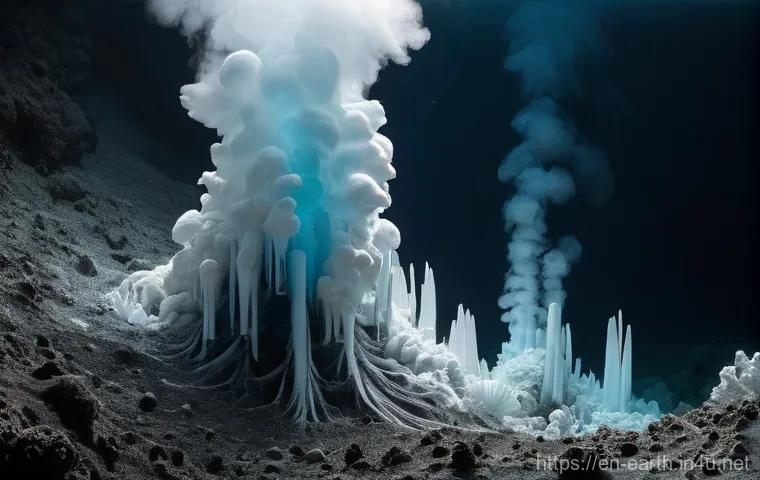
This is where my imagination really takes flight! If life can thrive in the extreme, sunless conditions of Earth’s hydrothermal vents, then what does that tell us about the potential for life beyond our own planet?
It’s a question that has captivated scientists and space enthusiasts alike, and honestly, it makes me feel incredibly hopeful about the universe. The discoveries we’re making about our deep oceans are directly informing our search for life in the cosmos, turning what once seemed like science fiction into tangible possibilities.
It’s a profound connection between oceanography and astrobiology that I find absolutely thrilling.
Icy Moons and Subsurface Oceans: Europa and Enceladus
When we look at places like Jupiter’s moon Europa or Saturn’s moon Enceladus, we see tantalizing clues. Both are thought to harbor vast, salty oceans beneath their icy shells, kept liquid by tidal heating from their giant parent planets.
And critically, these moons likely have rocky cores interacting with the water, meaning there could be hydrothermal activity similar to what we see on Earth.
Imagine that – black smokers on Europa! The possibility of life existing in these deep, dark, extraterrestrial oceans, powered by chemosynthesis from vents, is incredibly compelling.
It’s not just a hunch; it’s a scientifically plausible scenario, based on our understanding of Earth’s vent ecosystems.
Searching for Life’s Signature: Lessons from Earth’s Vents
The research we conduct on Earth’s hydrothermal vents isn’t just about understanding our own planet; it’s a vital training ground for astrobiology. By studying how vent communities survive and what chemical signatures they leave behind, we learn what to look for on other ocean worlds.
What kind of biosignatures – chemical evidence of life – might we detect if we were to send a probe to Europa’s ocean? How would we distinguish between geological processes and biological activity?
These are the critical questions that Earth-based vent research is helping us answer, guiding the design of future space missions and expanding our cosmic perspective.
Climate Connections: Vents and Their Dynamic Role in Earth’s Systems
You know, it’s easy to think of hydrothermal vents as these isolated, deep-sea phenomena, disconnected from our everyday lives. But as I’ve learned more, I’ve come to realize just how intricately woven they are into the larger tapestry of Earth’s climate and geological cycles.
They’re not just passive observers; they’re active participants, with a history of influencing global events and an ongoing role in regulating planetary chemistry.
It really makes you appreciate the complex, dynamic nature of our world, where seemingly small, hidden processes can have far-reaching impacts. It’s a perspective that’s truly broadened my understanding of Earth.
Methane Emissions and Ancient Warming: A Hidden Link
Recent studies have highlighted a fascinating, and somewhat concerning, connection between hydrothermal vents and past climate events. It turns out that some vents, particularly those in areas rich in methane hydrates, can release significant amounts of methane, a potent greenhouse gas.
There’s a growing body of evidence suggesting that massive methane releases from the seafloor, potentially linked to widespread hydrothermal activity or destabilized hydrate deposits, might have contributed to periods of rapid global warming in Earth’s ancient history.
It’s a sobering thought, realizing that these deep-sea features might have had a hand in shaping our planet’s climate long before humans ever walked the Earth.
Carbon Cycling and Beyond: Vents as Earth Regulators
Beyond methane, hydrothermal vents play a continuous, albeit complex, role in global carbon cycling. While some processes at vents release CO2, others involve the sequestration of carbon in mineral deposits or support chemosynthetic communities that draw carbon from the seawater.
They also contribute to the cycling of other important elements like sulfur, iron, and manganese, influencing ocean productivity and marine food webs on a much broader scale.
These exchanges between the Earth’s crust and the ocean are fundamental to maintaining our planet’s long-term habitability, acting as a crucial, if unseen, regulatory mechanism for our global systems.
The Thrill of Discovery: Exploring the Unknown Depths
I truly believe that the deep ocean, especially around hydrothermal vents, represents one of the last great frontiers of exploration on Earth. Every time a new vent field is discovered or a new species is identified, it sparks a fresh wave of excitement, not just for scientists, but for anyone who has a curious spirit.
It’s a reminder that even in an age of incredible technological advancement, there are still vast, untouched realms waiting to reveal their secrets. For me, that’s incredibly inspiring; it shows that the spirit of adventure and discovery is still very much alive, pushing us to constantly look deeper, literally, into the mysteries of our home planet.
New Technologies Pushing Boundaries: ROVs and Submersibles
The ability to explore these extreme environments has been utterly transformed by advancements in technology. Remotely Operated Vehicles (ROVs) and Autonomous Underwater Vehicles (AUVs) allow us to dive to incredible depths, stay there for extended periods, and collect data and samples with unprecedented precision, all while keeping human explorers safe on the surface.
Manned submersibles, like Alvin and Shinkai 6500, still offer that direct, awe-inspiring human experience of seeing these wonders firsthand. These incredible machines are our eyes and hands in a world that would otherwise remain completely inaccessible, constantly pushing the boundaries of what we thought was possible in deep-sea exploration.
The Future of Deep-Sea Exploration: What’s Next?
Looking ahead, the future of hydrothermal vent research is incredibly bright. We’re developing even more sophisticated sensors, imaging systems, and autonomous robots that can explore larger areas more efficiently and even learn from their environment.
There’s a growing focus on understanding the long-term dynamics of vent systems, their resilience to change, and their potential role in carbon capture.
The next few decades promise to unveil even more astonishing truths about these extraordinary places, further reshaping our understanding of Earth and perhaps even guiding our search for life beyond it.
I, for one, can’t wait to see what incredible discoveries are just around the corner!
Wrapping Things Up
Honestly, every time I delve into the world of hydrothermal vents, I’m left with a profound sense of awe and wonder. It’s like peeking behind a curtain to witness the raw, untamed forces that shaped our planet and continue to sustain some of its most extraordinary life forms. From the pioneering discoveries that shattered our understanding of deep-sea biology to the ongoing research hinting at the origins of life itself, these fiery oases are truly spectacular. For me, they symbolize the endless frontiers that still exist right here on Earth, constantly challenging our assumptions and reminding us of how much more there is to explore and understand in our own backyard. It’s a journey of discovery that I find incredibly inspiring and endlessly fascinating.
Handy Information to Keep in Mind
Here are a few quick takeaways I’ve personally found incredibly useful and fascinating when thinking about hydrothermal vents:
1. Not all vents are the same! While “black smokers” are famous, “white smokers” and “serpentinite vents” like the Lost City are also crucial. They each have unique temperatures, chemistries, and associated biological communities. It’s like different neighborhoods, each with its own vibe and residents, proving the deep sea is far from monotonous.
2. Life here doesn’t need the sun! This blew my mind. Instead of photosynthesis, vent ecosystems rely on chemosynthesis, where microbes use chemical energy (often from hydrogen sulfide) to create food. This completely rewrites the rules of primary production and shows how incredibly adaptable life can be, thriving in perpetual darkness.
3. They’re Earth’s natural chemists! Hydrothermal vents play a massive, yet often overlooked, role in regulating ocean chemistry and global element cycles. They’re constantly exchanging minerals and heat between the Earth’s crust and the oceans, impacting everything from ocean salinity to nutrient levels on a global scale.
4. A window into early Earth and extraterrestrial life. The conditions around vents—energy, chemical gradients, and protection from surface hazards—make them prime candidates for where life might have originated on Earth. This also means similar environments beneath the icy shells of moons like Europa or Enceladus could potentially harbor alien life, which is just mind-blowing to consider!
5. Exploration is ongoing and ever-evolving. We’re still discovering new vent fields and species regularly! Thanks to incredible advancements in ROVs, AUVs, and manned submersibles, scientists are pushing the boundaries of deep-sea exploration, revealing secrets we never thought possible. It’s truly an exciting time to be curious about our oceans and the technology that lets us explore them.
Key Takeaways
Reflecting on everything we’ve covered, it’s clear that hydrothermal vents are far more than just geological curiosities; they are dynamic, life-sustaining powerhouses that fundamentally reshape our understanding of Earth and the universe beyond. I’ve always felt a deep connection to stories of discovery, and the ongoing exploration of these deep-sea realms is no exception. They’re critical for understanding our planet’s past, present, and even its potential for hosting life elsewhere. The resilience of the ecosystems found there, thriving against all odds in perpetual darkness, is a testament to the sheer tenacity of life itself and how little we truly know about our own world.
From their vital role in ocean chemistry and potential links to ancient climate shifts, to their uncanny resemblance to environments where life might have originated, vents challenge us to think bigger and deeper. It’s a humbling reminder that even on our own planet, vast mysteries await our curiosity, hidden beneath miles of ocean. So, the next time you think about the ocean, remember these fiery hearts of the deep – they’re not just cold, dark places, but vibrant, dynamic worlds brimming with secrets and untold possibilities. Keep exploring, keep questioning, and let the wonder of our planet continue to inspire you!
Frequently Asked Questions (FAQ) 📖
Q: What exactly are hydrothermal vents, and why are they so incredibly important for understanding life on Earth?
A: Oh man, where to even begin! Imagine deep cracks in the Earth’s crust, usually along mid-ocean ridges where tectonic plates are pulling apart. Seawater seeps into these cracks, gets superheated by magma deep below, and then bursts back out through chimneys, often looking like plumes of black smoke – that’s why they’re famously called “black smokers.” These plumes are loaded with dissolved minerals.
What’s truly mind-blowing, and I mean truly mind-blowing, is that these vents host entire ecosystems thriving without sunlight! Instead of photosynthesis, life here uses chemosynthesis, drawing energy from the chemical reactions in the vent fluids.
For me, the real kicker is their potential role in the origin of life on Earth. Some scientists, myself included, really believe these fiery, chemical-rich environments could have been the cradles where life first sparked into existence billions of years ago.
It really makes you rethink everything you thought you knew about where life comes from!
Q: How does life manage to thrive in such extreme conditions around hydrothermal vents, and what new discoveries are blowing scientists’ minds recently?
A: It’s an absolutely incredible feat of nature, isn’t it? You’ve got crushing pressures, scorching hot acidic water right next to freezing cold ocean water, and absolutely no light.
Yet, life flourishes! The secret sauce is chemosynthesis, as I mentioned. Specialized bacteria and archaea form the base of the food web, converting the chemicals from the vents into energy.
Then, you have these truly bizarre and wonderful creatures like giant tube worms, blind shrimp, mussels, and crabs that have adapted to either feed directly on these microbes or form symbiotic relationships with them.
I’ve been following some recent research that’s just astounding – scientists are actually discovering entirely new species and even “hidden habitats” underneath the vents themselves!
It’s like finding a secret garden beneath a secret garden! These discoveries suggest that the biodiversity around these vents is far greater and more complex than we ever imagined, pushing the boundaries of what we thought was possible for life.
Q: Beyond the incredible marine life, how do hydrothermal vents impact our planet on a larger, global scale, particularly concerning Earth’s climate?
A: This is where it gets really big-picture, and honestly, a bit chilling when you consider our planet’s history. While they might seem like isolated pockets, hydrothermal vents play a significant role in global ocean chemistry.
They’re constantly cycling massive amounts of heat and minerals from the Earth’s interior into the oceans. What’s particularly fascinating, and frankly, a little concerning, is their connection to climate.
Recent studies, which I’ve found absolutely captivating, have shown that in Earth’s ancient past, periods of increased hydrothermal activity contributed to global warming through massive methane emissions.
Methane is a potent greenhouse gas, far more impactful than CO2 in the short term. Even today, they continue to play a role in carbon cycling and influence the overall chemical balance of the oceans.
It’s a powerful reminder that our planet is a single, interconnected system, and these deep-sea geysers have a silent, yet profound, impact on everything from ocean chemistry to the very air we breathe.