Have you ever looked at a dramatic landscape, maybe a towering volcano or a vast mountain range, and just felt that primal awe at the sheer power of our planet?
I know I certainly have! It’s a feeling that always sparks my curiosity about what’s truly happening deep beneath our feet. For the longest time, many of us probably thought of the Earth’s interior as this slow, almost unchanging entity, but let me tell you, what scientists are uncovering now about Earth science and magma activity is absolutely mind-blowing, hinting at a much more dynamic world than we ever imagined.
It turns out our fiery heart is beating a little faster, with some recent observations suggesting that magma flows might be more energetic and interconnected globally, potentially influencing the frequency of geological events around the world.
Can you believe that? And just when we thought we knew plate tectonics, new research is even refining that century-old model, showing that these colossal plates aren’t as rigid as we once believed, with some literally tearing apart internally, possibly linking to seismic and volcanic hotspots.
This isn’t just academic theory; it changes how we see the very foundations of our continents! Plus, the way we’re tapping into this deep-seated power is evolving rapidly – geothermal energy, for instance, is no longer a niche concept, but a burgeoning renewable source poised for massive growth thanks to incredible tech advancements.
It’s genuinely exciting to see how we’re learning to harness this immense, constant energy. Seriously, the more I delve into it, the more I realize how intricately linked these deep-Earth processes are to our daily lives and our future, from powering our homes to predicting potential hazards.
It’s a field bustling with innovation, with scientists now using everything from subtle seismic tremors to quantum magnetometers to get a real-time pulse on our planet’s underground movements, getting us closer to forecasting eruptions than ever before.
I’ve personally found myself glued to the latest studies, realizing that understanding this fundamental force is absolutely crucial in shaping a resilient future for us all.
Let’s dive deeper into these incredible discoveries and truly understand the fiery forces that sculpt our world.
The Restless Heart: Unveiling Magma’s Global Influence
Beneath the Surface: A More Connected Magma System
Have you ever considered that the fiery heart of our planet might be more interconnected than we ever dreamed? For years, the prevailing thought was that magma chambers were somewhat isolated entities, bubbling away independently beneath volcanoes.
But let me tell you, recent seismic imaging and geochemical studies are painting a vastly different picture. It turns out, there’s growing evidence that these subterranean molten pathways are far more extensive and intertwined, forming a complex global network that can influence geological events across vast distances.
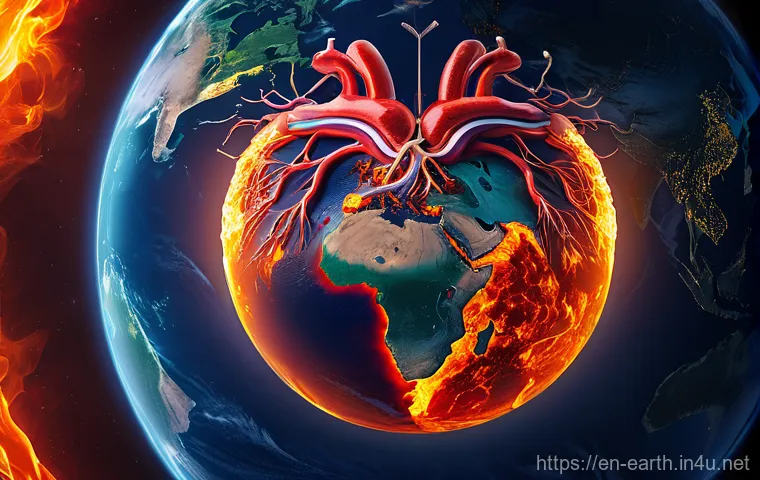
Imagine a subterranean highway system for molten rock, linking different volcanic regions and potentially even influencing plate movements. It’s like discovering the Earth has its own circulatory system, pumping molten rock around in ways we’re only just beginning to grasp.
This paradigm shift means we’re looking at a much more dynamic, almost ‘breathing’ planet, where a surge in activity in one region might subtly affect pressures and flows thousands of miles away.
It truly makes you ponder the interconnectedness of everything, even deep within the Earth, and personally, I find that incredibly humbling and exciting at the same time.
The scale of these systems is simply breathtaking, and it means our understanding of how and why volcanoes erupt, and even where new ones might form, is constantly evolving.
When the Earth Tears Itself Apart: Rift Zones and Magma Upwellings
Speaking of interconnectedness, have you ever felt that profound sense of awe looking at a rift valley, like the East African Rift, and wondered about the immense forces tearing continents apart?
I certainly have, and the deeper I delve into it, the more mind-boggling it becomes. These dramatic landscapes are essentially giant scars on Earth’s surface, evidence of the colossal tectonic plates being stretched and thinned by persistent upwellings of magma from the mantle.
It’s not a gentle pull; it’s more like a slow, inexorable tearing, driven by these deep-seated fiery plumes. What’s truly fascinating is that these magma upwellings aren’t just passive phenomena; they actively contribute to the rifting process, weakening the crust and providing the molten material that eventually forms new oceanic crust.
It’s a powerful feedback loop where magma drives the tearing, and the tearing creates pathways for more magma to rise. Observing the continuous seismic activity and volcanic eruptions in these zones, you can almost visualize the planet undergoing a massive, slow-motion surgery.
For me, witnessing documentaries or reading about these active rift zones always ignites a sense of wonder at the sheer, unyielding power contained within our world, a power that reshapes landmasses over geological timescales and directly influences the distribution of natural resources.
Our Shifting Foundation: Unraveling New Secrets of Plate Tectonics
Beyond Rigid Plates: The Dynamics of Internal Deformation
For decades, the concept of plate tectonics, where Earth’s crust is divided into a handful of rigid plates gliding over the mantle, has been the cornerstone of geology.
And honestly, it’s an incredible model that explains so much! But as I’ve been following the latest research, it’s clear that scientists are now adding incredible nuance to this century-old theory.
It turns out, those “rigid” plates might not be quite so unyielding after all. Imagine a massive, thick ice sheet floating on water; it moves as a single unit, but it also cracks and deforms internally under stress, right?
Our tectonic plates are similar. New studies, utilizing advanced GPS and seismic monitoring, are showing us that these colossal plates can and do deform internally, sometimes tearing apart or undergoing significant stress-induced changes far from their boundaries.
This internal deformation can create previously unrecognized fault lines, trigger unexpected seismic activity, and even influence localized volcanic hotspots.
It’s a bit like finding out your perfectly sturdy foundation has a few subtle, dynamic cracks you never knew about, and for me, that’s both a little unsettling and utterly captivating!
It changes how we think about risk assessment and resource distribution within continental interiors.
The Deep Connection: Linking Mantle Plumes to Surface Hotspots
Have you ever wondered why certain volcanic regions, like Hawaii or Yellowstone, exist far from typical plate boundaries? It’s always been one of those geological puzzles that genuinely sparks my imagination!
While plate boundary volcanism is straightforward, these “hotspots” have been attributed to stationary plumes of superheated rock rising from deep within the Earth’s mantle, literally burning their way through the overlying plate.
What’s truly exciting is how recent research is refining our understanding of these mantle plumes. It’s not just a simple, vertical upwelling; scientists are now using incredibly sophisticated seismic tomography – think of it as an MRI for the Earth – to map these plumes with unprecedented detail.
They’re discovering that these plumes can be surprisingly complex, sometimes bending or splitting as they encounter different layers in the mantle, and their interaction with the base of the tectonic plates can be much more dynamic than previously thought.
This deeper understanding is helping us to better predict the future paths of hotspot volcanism and even to understand how they might contribute to the internal tearing of plates I mentioned earlier.
It’s a captivating reminder that what happens thousands of miles beneath our feet directly influences the dramatic landscapes we see and experience every day.
Unlocking Earth’s Power: The Geothermal Energy Renaissance
Next-Gen Geothermal: Beyond Hot Springs and Steam
When most people hear “geothermal energy,” they probably picture natural hot springs or geysers, right? I know I used to! But let me tell you, the world of geothermal technology is absolutely exploding with innovation, moving far beyond these traditional, naturally occurring surface manifestations.
We’re talking about Enhanced Geothermal Systems (EGS) now, which are truly revolutionary. These systems involve drilling deep into the Earth where the temperatures are incredibly high, even in regions without obvious surface geothermal activity.
Then, engineers create artificial fracture networks in the hot, dry rock and inject water. This water gets superheated and is then brought back to the surface to generate electricity.
It’s essentially mimicking a natural hot spring deep underground, but in locations chosen by us, unlocking vast, previously inaccessible energy reserves.
For someone like me who’s passionate about sustainable energy, this is a game-changer! It means geothermal energy could eventually be deployed almost anywhere, offering a constant, reliable, baseload power source that doesn’t rely on the sun shining or the wind blowing.
It truly gives me hope for a cleaner energy future.
Geothermal’s Promise: A Constant, Clean Energy Source
The potential of geothermal energy, especially with these new technological advancements, is truly immense. Imagine a power source that runs 24/7, isn’t affected by weather patterns, and has a significantly smaller environmental footprint compared to fossil fuels.
That’s the promise of geothermal! I’ve been following the developments closely, and it’s genuinely inspiring to see how countries and companies are investing heavily in this sector.
It’s not just about producing electricity; geothermal heat can also be used directly for heating homes and greenhouses, and even for industrial processes.
The beauty of it lies in its consistency – once a plant is up and running, it provides a stable output, making it an ideal complement to intermittent renewables like solar and wind.
From personal experience, learning about these innovations makes me feel incredibly optimistic about our ability to transition to a truly sustainable energy grid.
We’re literally tapping into the planet’s internal furnace, a constant, massive energy supply that has been there all along, just waiting for us to figure out how to harness it responsibly.
| Geothermal Energy Type | Description | Key Benefits |
|---|---|---|
| Hydrothermal Systems | Utilizes naturally occurring underground reservoirs of hot water or steam, typically found near volcanic activity or tectonic plate boundaries. | Well-established technology, relatively low cost where resources are abundant, efficient for power generation. |
| Enhanced Geothermal Systems (EGS) | Engineered systems that create artificial reservoirs in hot, dry rock by injecting fluids to fracture the rock and extract heat. | Expands potential locations for geothermal power significantly, reduces reliance on natural reservoirs, stable baseload power. |
| Direct Use Geothermal | Utilizes geothermal heat directly for heating buildings, greenhouses, aquaculture, and industrial processes, without converting it to electricity. | Highly efficient, reduces fossil fuel consumption for heating, versatile applications for various industries and communities. |
Whispers from Below: Advanced Monitoring for a Safer Tomorrow
Listening to the Earth: The Revolution in Seismic Monitoring
Have you ever paused to think about the incredible symphony of sounds and vibrations constantly moving through our planet, mostly undetectable to us? It’s a concept that always gives me chills in the best way!
Traditionally, seismology has relied on conventional seismometers to detect and analyze earthquakes. While incredibly effective, new technologies are taking this “listening” to an entirely different level.
Imagine arrays of thousands of tiny sensors, distributed across vast areas, or even using fiber optic cables as super-sensitive seismic detectors – that’s what scientists are deploying now!
These advanced networks allow us to pick up even the most subtle tremors, micro-seisms, and ground deformations that were previously invisible. It’s like upgrading from an old radio to a high-fidelity sound system, giving us an incredibly detailed understanding of what’s happening deep underground.
For me, personally, this innovation is profoundly exciting because it means we’re getting closer than ever to understanding the intricate mechanics of fault lines and magma movements, which are crucial for forecasting potential hazards.
Predicting the Unpredictable: New Tools for Volcanic Forecasting
Volcanoes, with their raw power and unpredictable nature, have always held a special, fearsome place in human imagination. And honestly, who isn’t captivated by their majestic yet destructive force?
Predicting eruptions has always been the holy grail for volcanologists, and while it remains incredibly challenging, the tools at their disposal are becoming truly astonishing.
Beyond traditional seismometers and gas sensors, scientists are now employing everything from sophisticated satellite imagery that detects minute ground swelling to drones equipped with thermal cameras that can monitor changes in heat emissions, and even quantum magnetometers that measure tiny shifts in the Earth’s magnetic field as magma moves beneath the surface.
I find this especially fascinating because these technologies are giving us a more comprehensive, real-time “health check” on active volcanoes. The goal isn’t just to say *if* an eruption will happen, but to potentially narrow down *when* and *how large* it might be, giving communities vital time to prepare and evacuate.
It’s a monumental effort, driven by cutting-edge science, to coexist more safely with our dynamic planet.
Wrapping Things Up!
Wow, what a journey we’ve taken deep into the Earth’s fiery heart and across its dynamic surface! It’s truly incredible to think about how interconnected our planet is, from the subtle movements of molten rock thousands of miles down to the powerful shifts that shape our landscapes. I honestly hope this dive into magma, plate tectonics, geothermal energy, and advanced monitoring has sparked your curiosity as much as it has mine. Understanding these colossal forces isn’t just for geologists; it helps us all appreciate the amazing, ever-changing world we live on and how we can better live with its powerful rhythms.
Reflecting on these topics, I always feel a renewed sense of wonder at the intricate dance of natural processes. It’s a reminder that even the ground beneath our feet is a living, breathing system, constantly evolving and influencing everything around us. From my perspective, keeping an eye on these geological marvels isn’t just about scientific discovery; it’s about connecting with our planet on a deeper level and embracing the incredible power that lies beneath its beautiful facade. We’re truly just beginning to unravel its deepest secrets, and honestly, that’s what makes it so incredibly exciting!
Useful Information to Know
1. Embrace Lifelong Learning About Our Planet: The Earth is a dynamic system, and scientific understanding is constantly evolving. Keep an eye on reputable science news sites, university research pages, and documentaries. Even subscribing to a few geology or earth science newsletters can keep you informed about new discoveries, from deep-sea vents to seismic breakthroughs. It’s truly fascinating how much we’re still learning!
2. Understand Local Geological Hazards: While this post covered global phenomena, it’s always smart to be aware of the specific geological features and potential hazards in your own region. Are you near a fault line, an old volcanic zone, or an area prone to landslides? A quick search of your local geological survey or emergency management agency can provide invaluable, practical information and help you understand your local environment better.
3. Support Sustainable Energy Research: Geothermal energy is a superstar in the clean energy world because it’s always on. By learning more about it and advocating for its development, we can contribute to a more sustainable future. Look for organizations promoting renewable energy and consider how you can support initiatives that harness Earth’s natural heat responsibly. Every little bit of awareness helps push these innovations forward.
4. Consider Citizen Science Opportunities: Believe it or not, you don’t have to be a scientist to contribute to geological understanding. Many projects, especially related to seismic monitoring or even local wildlife observations, welcome citizen scientists. Participating can be a rewarding way to engage directly with scientific research and gain a unique, hands-on perspective on how our planet works.
5. Engage with Educational Resources: The internet is packed with amazing educational content. From interactive maps of tectonic plates to virtual field trips of volcanic regions, there are countless ways to deepen your knowledge. YouTube channels from scientific institutions, online courses, and even museum websites offer incredible insights that can make complex geological concepts accessible and exciting for everyone.
Key Takeaways for a Deeper Understanding
This journey through Earth’s inner workings has shown us that our planet is far more complex and interconnected than traditional models once suggested. We’ve discovered that magma systems aren’t isolated but form extensive subterranean networks that can influence geological events over vast distances, challenging our previous understanding of Earth’s internal dynamics. This means the Earth operates more like a single, integrated system, with activity in one area potentially affecting others globally, fostering a more holistic view of our world’s geology.
Furthermore, plate tectonics, while a foundational theory, is continuously being refined. We’re now seeing compelling evidence that Earth’s supposedly “rigid” plates exhibit internal deformation, leading to new fault lines and unexpected seismic activity far from their boundaries. This nuanced perspective on plate behavior highlights a more dynamic and less predictable Earth, demanding advanced monitoring. This evolution in understanding directly influences our ability to assess and mitigate geological risks.
The renaissance in geothermal energy is truly inspiring, moving beyond simple hot springs to advanced Enhanced Geothermal Systems (EGS) that promise a constant, clean, baseload power source almost anywhere on Earth. This technological leap means we’re tapping into the planet’s own furnace, offering a sustainable alternative to fossil fuels and a stable energy future. I personally find the prospect of widespread, reliable geothermal power incredibly hopeful for our planet’s energy independence.
Finally, the revolution in seismic and volcanic monitoring is providing unprecedented insights into Earth’s deep processes, enhancing our ability to predict natural hazards. From fiber optic cables acting as ultra-sensitive sensors to drones and satellite imagery, these innovations are improving our real-time “health checks” of active regions. This commitment to advanced monitoring is crucial for building safer communities and fostering a more harmonious coexistence with our dynamic planet.
Frequently Asked Questions (FAQ) 📖
Q: What exactly does it mean when scientists say Earth’s tectonic plates aren’t as “rigid” as we thought?
A: Oh, this is such a fascinating point, and it totally changes how I picture our planet’s crust! For ages, the conventional wisdom, the one we all learned in school, was that tectonic plates were these giant, unyielding blocks of rock, just gracefully gliding across the Earth’s mantle.
But, new research is really shaking things up, showing that’s not the whole story. What scientists are finding now, especially with supercomputer modeling, is that these massive oceanic plates can actually experience significant internal damage and even tear apart right in their middle, far from where they meet other plates at boundaries like subduction zones.
Imagine trying to bend a thick piece of plastic – it’ll eventually crack and break, right? Our plates are a bit like that, but on a colossal, geological timescale.
This “tearing” or deformation within the plate itself can happen due to immense forces tugging at them as they drift across the globe, and it’s thought to be linked to seismic activity and volcanism in areas we previously wouldn’t have expected.
It just goes to show you that even a century-old model as foundational as plate tectonics still has secrets to reveal, and these discoveries make me feel even more connected to the ever-changing, dynamic nature of our planet!
Q: How are new technologies helping us get better at predicting volcanic eruptions and understanding magma movements?
A: This is where things get really exciting for me, because it feels like science fiction is becoming reality! For a long time, predicting volcanic eruptions was a bit like trying to guess the weather a month in advance – incredibly difficult and often imprecise.
But thanks to incredible advancements in technology, scientists are now gaining an unprecedented “real-time pulse” on our planet’s underground movements.
We’re talking about everything from super-sensitive seismometers that can detect the most subtle tremors caused by moving magma, to satellite imagery and GPS networks that measure ground deformation with amazing accuracy.
I’ve seen some of the data visualizations, and it’s like getting an x-ray of the Earth’s interior! They’re even using new imaging methods like full-waveform inversion to get a much clearer, 3D picture of the mantle’s deep structures, revealing previously unseen anomalies that challenge our old understandings.
Plus, machine learning and AI are becoming game-changers, sifting through vast amounts of seismic data, gas emissions, and thermal monitoring readings from satellites to identify subtle precursor signals and patterns that human eyes might miss.
This integrated approach, often combining ground-based sensors (some even deployed by drones!), satellite monitoring, and advanced analytics, is giving us earlier warnings, sometimes hours or even days in advance.
It’s still not a perfect crystal ball, but knowing scientists can map magma flow through tremors and get closer to forecasting these powerful events genuinely makes me feel a little safer, and a lot more amazed at human ingenuity.
Q: What are some of the most exciting recent advancements in geothermal energy, and how might they impact our future?
A: Oh, geothermal energy! This is a topic that just lights me up because it truly feels like we’re finally unlocking the Earth’s constant, immense power.
It’s no longer just a niche concept; it’s rapidly evolving into a major player in the renewable energy game. One of the biggest hurdles for geothermal has always been access – you needed specific geological conditions.
But new technologies are changing that entirely. We’re seeing incredible advancements in drilling technology, like gyrotron drills that can literally vaporize rock, allowing us to drill much deeper and access geothermal resources in over 90% of the world.
Can you imagine? This could transform old coal and natural gas plants into clean geothermal powerhouses! Then there’s Enhanced Geothermal Systems (EGS) and Advanced Geothermal Systems (AGS), which are basically human-made geothermal reservoirs.
They involve injecting fluid deep underground under controlled conditions to create or re-open fractures in hot, dry rock, making it permeable enough to extract heat.
This means we don’t have to rely on naturally occurring hydrothermal sites anymore; we can create the conditions for geothermal almost anywhere. Companies are even developing “dry rock” geothermal storage techniques and using horizontal drilling to harness much more energy efficiently.
What excites me most is the potential impact: next-generation geothermal could provide a massive amount of stable, dispatchable electricity – meaning it’s not dependent on the weather like solar or wind.
The U.S. Department of Energy even suggests it could provide up to 120 gigawatts of firm capacity by 2050. Personally, seeing how these innovations are making this constant, clean energy source more accessible and affordable gives me so much hope for a truly sustainable future.
It’s like we’re finally learning to tap into the planet’s heartbeat to power our lives!