
Wow, the Earth is giving us a lot to talk about lately, isn’t it? It feels like every other day there’s a new headline about record-breaking heat, unusual storms, or shifting ecosystems.
Personally, I’ve noticed the weather patterns changing even in my local area, and it truly makes you stop and think about the bigger picture. We’re living in a fascinating, if sometimes daunting, era where Earth science and climate prediction are more critical than ever, not just for academics but for all of us.
The good news is, scientists are making incredible strides, leveraging cutting-edge AI and advanced computing to refine climate models, offering us clearer insights into future scenarios – from predicting extreme weather events with surprising accuracy to understanding complex compound events.
There’s a near-unanimous consensus that human activities are driving these changes, and frankly, ignoring that just isn’t an option anymore. Getting a handle on these predictions, and the science behind them, is vital for everyone, from policymakers to regular folks like us planning our next vacation.
So, if you’re curious about what’s really happening with our planet and what the future might hold, let’s explore this together and truly understand the advancements shaping our world.The world around us is buzzing with constant change, and honestly, it’s hard not to notice how much our planet is shifting right before our eyes.
I’ve personally experienced increasingly unpredictable weather, from scorching heatwaves to unexpected downpours, making me realize just how central Earth science and climate prediction have become to our daily lives.
This isn’t just about obscure scientific theories anymore; it’s about understanding the very air we breathe and the ground beneath our feet. The good news is, advancements in technology, especially with AI and advanced computing, are allowing scientists to create more accurate and high-resolution climate models than ever before, helping us better anticipate future environmental shifts and even compound extreme events.
With a nearly unanimous scientific consensus pointing to human activity as the primary driver of these changes, the urgency to grasp these insights has never been greater.
Dive into this journey with me, and let’s unravel the powerful predictions and groundbreaking science that are defining our planet’s future.
The Unfolding Story of Our Planet: Why Every Day Matters
Honestly, it’s wild to think about how much our world is changing, and often, it feels like we’re just scratching the surface of understanding it all. I remember growing up, weather forecasts felt pretty straightforward, but now? It’s a whole different ball game. We’re witnessing shifts that our grandparents wouldn’t have even imagined, and personally, I’ve noticed the seasons becoming less predictable right here in my own backyard. Those sweltering summer days seem to start earlier and linger longer, and the sudden downpours can be truly intense. This isn’t just about a few hot days; it’s about a profound, systemic transformation of our planet’s climate. From melting glaciers in the Arctic that I’ve seen in documentaries, to the increasingly powerful hurricanes hitting coastlines, the evidence is everywhere if you just look. It really makes you pause and consider the bigger picture, not just for us, but for future generations. What we’re learning through Earth science today isn’t just academic; it’s absolutely crucial for how we live tomorrow.
Witnessing the Shifts: More Than Just “Bad Weather”
When I talk about changes, I’m not just talking about the occasional heatwave or a heavier-than-usual snowstorm. We’re talking about long-term trends that are altering fundamental aspects of our environment. I’ve personally felt the sting of a prolonged drought impacting local agriculture, and seen the news reports of unprecedented wildfires sweeping through regions that were once considered safe. It’s a sobering reality. These aren’t isolated incidents; they’re pieces of a larger puzzle that scientists are diligently working to put together. For me, it truly brings home the urgency of understanding these planetary dynamics – because what happens in one corner of the globe eventually impacts us all, even if it’s just through supply chains or insurance premiums.
Connecting the Dots: From Local to Global Impacts
The beauty of Earth science is how it helps us connect those local observations to global phenomena. What feels like an unusually hot summer day here might be linked to a broader pattern of ocean warming or atmospheric changes occurring thousands of miles away. It’s a complex, interconnected web, and that’s why the work of climate scientists is so incredibly vital. They’re not just looking at temperatures; they’re examining everything from sea levels to biodiversity, ocean currents to atmospheric chemistry. I’ve always been fascinated by how everything on Earth is so intricately linked, and seeing how human activity fits into that delicate balance truly makes you appreciate the scale of what we’re dealing with.
Decoding Tomorrow’s Weather: The AI Revolution in Prediction
It’s genuinely mind-boggling to see how far climate prediction has come, especially with the incredible leap in AI technology. I mean, just a few decades ago, a five-day forecast felt like magic, and anything beyond that was pure guesswork. Now, we’re talking about models that can simulate future scenarios with astounding detail and resolution, all thanks to the sheer processing power and pattern recognition capabilities of artificial intelligence. I’ve been following this closely, and it feels like we’re on the cusp of a new era where our understanding of future climate events will be sharper than ever before. This isn’t science fiction anymore; it’s happening right now, transforming how meteorologists and climate scientists approach their work, giving us a clearer window into what might lie ahead, and personally, I find that both exciting and a little bit daunting.
AI’s Game-Changing Role in Forecasting
So, what exactly is AI doing that’s so revolutionary? Think about it: traditional climate models are built on complex physics equations, which are still incredibly important, but they can be computationally intensive and sometimes struggle with localized, highly variable phenomena. This is where AI swoops in. It can sift through mountains of historical weather data, satellite imagery, sensor readings, and even social media patterns – yes, really! – to identify subtle correlations and predict outcomes that might elude traditional methods. I’ve heard experts describe it as giving our models an almost intuitive understanding of the atmosphere, allowing them to learn from past mistakes and continuously refine their predictions. It’s like having an incredibly fast, tireless super-brain dedicated solely to figuring out what the weather will do next, and the implications for everything from agriculture to disaster preparedness are monumental.
From Raw Data to Actionable Insights
One of the biggest wins I see with AI in climate prediction is its ability to turn raw, complex data into genuinely actionable insights. It’s not just about predicting that it will rain; it’s about predicting *how much*, *where*, and *when* with unprecedented accuracy, sometimes down to a neighborhood level. For me, this means better preparation for extreme events. Farmers can make smarter planting decisions, urban planners can design more resilient infrastructure, and emergency services can deploy resources much more effectively. I’ve often wondered how much better we could have handled past natural disasters if we had this level of predictive power. The models are becoming so sophisticated that they can even anticipate ‘compound events’ – like a heatwave immediately followed by intense rainfall – which were notoriously difficult to predict before. It truly feels like we’re moving from reaction to proactive planning, and that’s a huge step forward for everyone.
Beyond the Forecast: Understanding Compound Extremes
While a regular weather forecast helps us plan our week, the real challenge, and frankly, the area that keeps me up at night, is understanding compound extreme events. These aren’t just isolated incidents like a single heatwave or a single flood. We’re talking about multiple, often interconnected, extreme weather events happening either simultaneously or in quick succession, amplifying their devastating impact. Think about a prolonged drought leading to widespread wildfires, immediately followed by intense rainfall that causes mudslides on the scorched earth. That’s a compound event, and it’s far more destructive than any single event alone. I’ve seen firsthand the news reports and felt the stress in communities hit by these double-whammies, and it really underscores why our scientific community is dedicating so much effort to unraveling these complex scenarios. It’s about building resilience for a future that’s looking increasingly complicated.
The Domino Effect of Nature’s Fury
When one extreme event triggers another, it’s like a chain reaction, and the damage compounds exponentially. I often visualize it as a set of dominoes falling, where the impact of the first pushes over the second, and so on. For instance, coastal areas might experience extreme heat, leading to significant drought and water stress, which then weakens ecosystems. If that’s followed by an intense hurricane bringing storm surge and heavy rains, the weakened land is far more susceptible to erosion and flooding. The combined stress on infrastructure, emergency services, and human communities is immense. I’ve learned that these events are becoming more frequent and intense in many regions, making it critically important to move beyond single-hazard thinking and adopt a more holistic, interconnected approach to climate adaptation and disaster preparedness. It’s a tough reality to face, but ignoring it simply isn’t an option.
Forecasting the Unpredictable: New Scientific Frontiers
Predicting these compound extremes is incredibly challenging, but it’s an area where scientists are making some truly remarkable breakthroughs, again, often with the help of advanced computing and AI. Traditional models might miss the subtle interactions between different climate variables that lead to these complex events. However, the new generation of climate models, armed with more data and sophisticated algorithms, are starting to tease out these connections. I find it fascinating that they’re looking at not just atmospheric conditions, but also oceanic patterns, land surface changes, and even human vulnerability data to create a more complete picture. This deeper understanding means we can start to anticipate these “domino effects” before they happen, allowing communities to better prepare and potentially save lives and livelihoods. It’s a testament to human ingenuity in the face of daunting natural challenges.
Our Role in the Great Planetary Shift: It’s Personal
Okay, let’s get real for a moment. While we’re talking about incredible scientific advancements and complex global systems, it’s impossible to ignore the elephant in the room: our human footprint. It really hits home when you realize that almost every reputable scientific body agrees that human activities are the primary driver behind the current rapid climate changes. It’s not just some abstract concept anymore; it’s something I personally feel a responsibility for, as part of this global community. Every time I make a choice – whether it’s what I buy, how I travel, or even how I power my home – I’m aware that it contributes, however small, to the larger picture. This isn’t about pointing fingers, but about recognizing our collective impact and understanding that we each have a role to play in navigating this complex planetary shift. It feels both empowering and challenging to truly grasp the scale of our influence.
Understanding Our Carbon Footprint and Beyond
When we talk about human impact, the conversation often circles back to carbon emissions, and for good reason. The burning of fossil fuels for energy, transportation, and industry releases greenhouse gases that trap heat in our atmosphere, leading to a warming planet. But our impact goes beyond just CO2. Deforestation, agricultural practices, and even the products we consume all play a part. I’ve spent time looking into my own carbon footprint, and honestly, it can be an eye-opener. It’s not about perfection, but about awareness and making conscious choices where we can. For me, that’s meant exploring more sustainable transportation options and being more mindful about my energy consumption at home. It’s a continuous learning process, and every little step, when multiplied by millions, starts to make a difference.
Empowering Individual and Collective Action
Sometimes, the scale of climate change can feel overwhelming, making individual actions seem insignificant. But I firmly believe that every choice matters, and collective action is built from individual decisions. From advocating for renewable energy policies in our communities to supporting businesses with sustainable practices, there are countless ways to contribute. I’ve found that even small shifts, like reducing food waste or choosing reusable products, can add up. Moreover, simply talking about climate change with friends and family, sharing reliable information, and encouraging open dialogue can be incredibly powerful. It helps foster a sense of shared responsibility and moves us towards collective solutions. It’s about building a sustainable future, and frankly, that future starts with each of us.
From Satellites to Supercomputers: The Tools Shaping Our Future
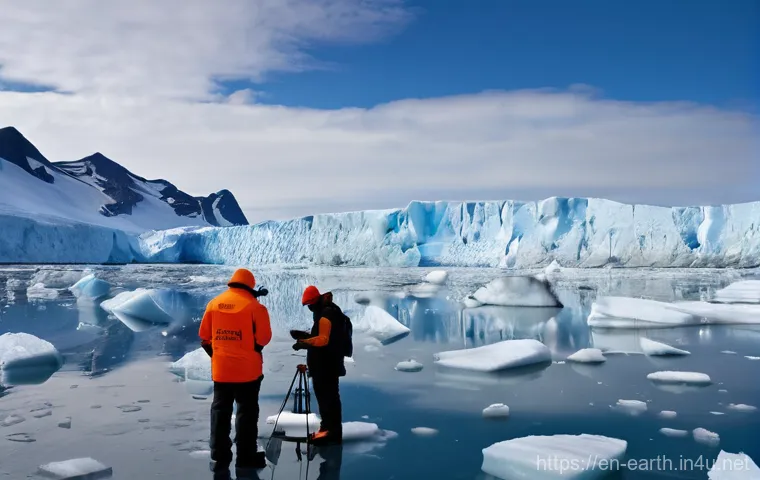
It’s truly astonishing to think about the sheer array of technology that scientists are now leveraging to understand our planet. When I picture a climate scientist, I no longer just see someone in a lab with test tubes; I envision a complex network of space-faring satellites, ocean-roaming buoys, and supercomputers running mind-boggling calculations. It’s this incredible toolkit that’s giving us an unprecedented view of Earth, both inside and out, from the deepest oceans to the highest reaches of the atmosphere. I often feel like we’re living in a golden age of observational science, where every new piece of data brings us closer to a complete understanding of our complex planetary systems. The scale of these operations, the global cooperation involved, and the sheer ingenuity behind these tools really makes me hopeful for our ability to navigate the challenges ahead.
Eyes in the Sky: The Power of Satellite Observation
Just imagine having a constant, global surveillance system for our planet! That’s essentially what our network of Earth-observing satellites provides. I’m always amazed by the data these orbiting eyes collect: everything from sea surface temperatures and ice sheet thickness to forest cover changes and atmospheric gas concentrations. This isn’t just pretty pictures; it’s incredibly precise measurements that help scientists track long-term trends, monitor extreme events in real-time, and validate the accuracy of their climate models. For me, the ability to see our planet as a single, integrated system from space is profoundly powerful. It strips away national borders and personal biases, showing us the raw, undeniable facts of how our Earth is changing. It truly puts the “global” in global warming into perspective.
The Brains of the Operation: Supercomputing Power
All that data from satellites, ground sensors, and ocean buoys would be meaningless without the incredible processing power of supercomputers. These machines are the true workhorses behind modern climate prediction, crunching quadrillions of calculations per second to simulate the intricate interactions of our climate system. I’ve tried to wrap my head around the sheer scale of these computations, and it’s mind-boggling. They’re running incredibly detailed climate models, some with resolutions down to just a few kilometers, allowing scientists to simulate future weather and climate scenarios with unprecedented accuracy. It’s like having an incredibly powerful crystal ball, but one that’s built on physics, mathematics, and an immense amount of real-world data. Without these technological giants, our understanding of Earth’s future would be significantly diminished, and our ability to plan for it, severely hampered.
Making Sense of the Models: What Do They Really Tell Us?
When we talk about climate models, it can sound a bit abstract, like something only scientists can truly grasp. But for me, these models are essentially our best guess, based on solid science, about what the future might hold for our planet. They’re not crystal balls that give us exact dates and times for every event, but rather sophisticated tools that project how different factors – like greenhouse gas emissions – could influence our climate over decades and centuries. I’ve come to understand that these models are constantly being refined, improved, and tested against historical data to ensure their reliability. It’s truly a testament to scientific rigor, always striving for better accuracy and a more complete picture, even when that picture isn’t always comfortable to look at. Understanding their capabilities and limitations is key to interpreting the projections we hear in the news.
The Art and Science of Climate Modeling
Building a climate model is an incredibly complex undertaking. It involves integrating physics, chemistry, biology, and even human behavior into a massive set of equations that describe how the atmosphere, oceans, land, and ice interact. I often think of it as trying to build a digital twin of our entire planet, complete with all its intricate moving parts. Scientists input various “scenarios” – different levels of future greenhouse gas emissions, for example – and the model then calculates how the climate might respond. The results aren’t just a single prediction but a range of possibilities, often expressed as probabilities. It’s not about saying “this *will* happen,” but rather “if we continue on this path, there’s a high probability *this* could happen.” This nuanced approach is why understanding the underlying assumptions and uncertainties of models is so important, and something I always try to dig into when reading new reports.
From Projections to Practical Insights
So, what do these complex models mean for us, the everyday person? Well, the insights they provide are crucial for everything from urban planning to agricultural strategies, and even just planning your personal future. For instance, knowing the potential range of sea-level rise in a particular region can inform coastal development plans. Understanding projected changes in rainfall patterns can help farmers adapt their crops or irrigation methods. I find that when these broad projections are translated into local impacts, it becomes much more tangible and relevant. This is where policy makers, city planners, and even homeowners can leverage the scientific output to make more informed decisions about resilience and adaptation. It’s about taking those scientific predictions and figuring out how they translate into real-world actions to safeguard our communities.
Navigating Uncertainty: Practical Steps for a Changing World
Let’s be honest, talking about climate change and future predictions can sometimes feel a bit heavy, even overwhelming. The sheer scale of it, and the inherent uncertainties, can make you wonder where to even begin. But personally, I’ve found that focusing on practical steps, both big and small, helps turn that feeling of apprehension into a sense of purpose. It’s about acknowledging the challenges but then asking, “Okay, so what can *I* do? What can *we* do?” We’re living in a world of constant change, and learning to navigate that change, not just react to it, is a skill we all need to cultivate. It’s about building a mindset of resilience and adaptability, both individually and as communities. This isn’t just about what governments or big corporations do; it’s about how we all choose to live and prepare for the future.
Building Personal Resilience: Small Changes, Big Impact
When I think about practical steps, my mind immediately goes to personal resilience. This isn’t just about preparing for a big storm, though that’s part of it. It’s about making everyday choices that align with a more sustainable and adaptable lifestyle. For example, have you thought about your home’s energy efficiency? Simple things like LED lights or better insulation can make a huge difference in energy consumption. Or how about your diet? Reducing food waste and opting for more locally sourced produce can have a surprisingly large positive impact. I’ve personally started a small backyard garden, and while it’s just a drop in the bucket, it connects me more deeply to where my food comes from and reduces my reliance on long supply chains. These small, conscious decisions, when adopted widely, create a powerful ripple effect.
Community Action and Advocacy: Our Collective Strength
Beyond individual actions, I truly believe our greatest strength lies in collective action and community engagement. No single person can solve climate change, but together, we can drive significant change. This could mean getting involved in local initiatives that promote renewable energy, supporting businesses committed to sustainability, or advocating for policies that prioritize environmental protection. I’ve seen firsthand how powerful community groups can be in pushing for greener infrastructure or organizing local clean-up efforts. Sharing knowledge, pooling resources, and working together to implement solutions are key. It’s about building stronger, more resilient communities that are better prepared for whatever the future may bring. After all, we’re all in this together, and by supporting each other, we can create a much brighter and more sustainable path forward.
Here’s a quick overview comparing traditional climate modeling with the newer, AI-enhanced approaches:
| Feature | Traditional Climate Modeling | AI-Enhanced Climate Modeling |
|---|---|---|
| Primary Approach | Physics-based equations, atmospheric/oceanic dynamics | Machine learning algorithms, pattern recognition |
| Data Input | Meteorological observations, historical climate data | Vast datasets including satellite, sensor, social media, historical data |
| Computational Intensity | High, based on complex numerical simulations | Very high, optimized for identifying complex non-linear relationships |
| Resolution & Detail | Can be limited, especially for local phenomena | Often higher resolution, better for local and sub-seasonal predictions |
| Strengths | Deep physical understanding, long-term projections | Faster processing, identifying subtle correlations, improved extreme event prediction |
| Limitations | Can struggle with complex interactions, computationally expensive for high resolution | Requires massive amounts of quality data, ‘black box’ aspects can make interpretation challenging |
Closing Thoughts
As we wrap up this journey through our planet’s evolving story and the incredible role AI is playing in helping us understand it, I truly hope you feel as inspired and informed as I do. It’s a lot to take in, but what’s clear is that we’re living in a pivotal time. From the subtle shifts in our local weather to the grand, interconnected systems revealed by satellites, every piece of information underscores the urgency and importance of our collective actions. Remember, knowledge is power, and by staying curious and engaged, we each become a part of the solution, shaping a more resilient and sustainable future for everyone.
Useful Information to Know
1. Stay informed about local weather and climate trends. Many government agencies offer localized climate data and future projections specific to your region, which can be incredibly useful for personal planning and understanding.
2. Consider adopting energy-efficient practices at home. Simple changes like switching to LED lighting, optimizing your thermostat, or ensuring good insulation can significantly reduce your carbon footprint and save you money.
3. Support businesses and policies that prioritize sustainability. Your consumer choices and civic engagement can send powerful signals, encouraging broader shifts towards environmentally responsible practices and renewable energy.
4. Explore community initiatives focused on climate resilience. Many towns and cities have local groups working on everything from tree planting to disaster preparedness, offering great opportunities to connect and make a difference.
5. Educate yourself and others about climate science. Reliable sources like NASA, NOAA, and university research centers provide accessible information that can help you understand the complexities and separate fact from fiction.
Key Takeaways
Our planet is undergoing significant climate shifts, driven primarily by human activities. Advanced Earth science, especially with AI, is revolutionizing our ability to predict weather and understand complex “compound extreme” events. While daunting, recognizing our collective impact empowers us to take both individual and community-level actions, leveraging technological tools like satellites and supercomputers to build a more resilient and sustainable future.
Frequently Asked Questions (FAQ) 📖
Q: uestions
A: bout Our Changing Planet
Q: How are new technologies like
A: I really changing the game when it comes to predicting our planet’s future? A1: Oh, this is such a fascinating area, and honestly, it’s where I get really excited about the future of Earth science!
We’re living through an incredible time where Artificial Intelligence, especially things like machine learning and neural networks, is absolutely revolutionizing how we understand and predict climate.
For so long, traditional climate models, while brilliant, were often limited by computational power and the sheer complexity of our planet’s systems. But now, with AI, scientists can sift through mountains of data—think satellite imagery, sensor readings, historical records—at speeds and scales we could only dream of before.
What this means is AI helps us spot intricate patterns and connections that are practically invisible to the human eye, dramatically boosting the accuracy of climate predictions.
I’ve seen how these AI-driven systems are making early warning systems for extreme weather events incredibly precise, which is a game-changer for disaster preparedness.
They’re also optimizing how we manage precious resources like water and energy and even helping to plan out smarter, more resilient urban areas. It’s truly like giving our climate scientists a superpower, allowing them to create incredibly detailed “digital twins” of our Earth and run complex simulations thousands of times faster.
This isn’t just about bigger models; it’s about smarter, more adaptive ones that can give us a much clearer picture of what’s coming, from predicting specific rainfall patterns to understanding how global warming impacts local ecosystems.
It feels like we’re finally getting the clarity we need to make truly informed decisions for our future.
Q: Given all the buzz, is there a clear consensus on whether human activities are truly driving these climate changes?
A: That’s a question I hear a lot, and it’s a really important one. From my deep dives into the science, the answer is a resounding yes – there’s a virtually unanimous scientific consensus that human activities are the primary force behind the climate changes we’re experiencing.
We’re not talking about a small majority here; studies have consistently shown that between 90% and 100% of actively publishing climate experts agree on human-caused global warming, with some recent research even pushing that figure to over 99%.
Think about that for a second – almost every single climate scientist, the people who dedicate their lives to studying our planet, is on the same page.
Organizations like the Intergovernmental Panel on Climate Change (IPCC) have stated unequivocally that the sharp increase in greenhouse gases like CO2, methane, and nitrous oxide since the industrial era is directly a result of human actions, predominantly the burning of fossil fuels and changes in land use.
This isn’t just a recent finding; this consensus has been building and solidifying since the 1980s, based on over a century of rigorous scientific evidence.
To me, this level of agreement among experts across the globe is incredibly powerful and really underscores the urgency of understanding our role in shaping the planet’s future.
It’s not a theory anymore; it’s an established fact.
Q: Beyond the headlines, what does all this advanced climate prediction mean for us, the everyday people, and how can we use this knowledge?
A: This is where the rubber meets the road, right? While the big, global picture is vital, what truly impacts us is how climate change and these advanced predictions trickle down to our daily lives.
And trust me, it’s affecting us in ways many people don’t even realize! From a health perspective, I’ve seen how hotter heatwaves lead to more cases of heatstroke and can worsen conditions like heart disease, even making it harder to get a good night’s sleep.
Increased humidity can mean more mold in our homes, affecting our breathing, and I’ve even noticed my allergies acting up more intensely. Financially, it’s hitting our wallets too: extreme weather events that damage crops can drive up food prices at the grocery store.
Ever notice your AC bill skyrocketing? That’s often climate-related, and higher insurance premiums for homes in flood or fire-prone areas are becoming a harsh reality.
But here’s the hopeful part: these super-accurate predictions aren’t just for scientists to marvel at. They are crucial tools that governments and communities can use to make our lives safer and more predictable.
For instance, better forecasts mean we can plan evacuation routes more effectively during hurricanes or wildfires. Farmers can make smarter decisions about planting and irrigation, helping to stabilize our food supply.
Even urban planners are using this data to design infrastructure that can withstand future climate impacts. Personally, understanding these predictions empowers me to be more prepared – whether it’s checking long-range forecasts for travel, making smarter choices about my home, or advocating for local changes.
It’s about taking that scientific knowledge and turning it into practical steps for a more resilient future for all of us.